JAMIE: If this is a sandbox for the future, it’s: How on earth do you create celebratory, transformative, healing culture in the most adverse conditions possible? And we’re practicing. And we show up for a week or a month on the playa every year and
We practice infrastructure.
We practice community support.
We practice mutual aid.
We practice food, clothing, and shelter.
We practice worship.
We practice celebration.
I mean, in some respects, I would say it is the hope for the future. Everything that Burning Man is about, and everything that makes it so impossible and so hard, right, is really we just raised the bar while things were still relatively cushy and began training for 2050.
STUART: Hey everybody, it is Burning Man LIVE once again, and I am still Stuart Mangrum. My guest today is somebody I’ve been wanting to talk to for a while, whose career I’ve been following and whose writing I’m a big fan of.
Jamie Wheal is a writer and researcher best known for his work on human performance, and various states of consciousness. He’s probably best known as the co-author with Stephen Kotler of “Stealing Fire: How Silicon Valley, the Navy SEALs, and Maverick Scientists Are Revolutionizing the Way We Live and Work” which was a big, big best seller. He’s also a veteran Burner, and recently published a somewhat provocative essay on Substack with a familiar title: The Man WILL Burn!
Welcome Jamie Wheal. Thanks for joining me today.
JAMIE: Great to be here, man.
STUART: So I will start with the essay. You’ve written in that essay, and elsewhere I believe, that Black Rock City is actually best seen as three different cities in one. For any of my listeners who aren’t familiar with your work, can you break that down for us?
JAMIE: The genesis for that essay was some Brits from Ooligan Alley, that sound camp from a few years back, and they had done a beautiful photo coffee table book called Dust to Dawn, and they asked me to write the intro. And so that essay was originally inspired by that. And I thought, well, fuck me. What hasn’t, what on earth could you say that hasn’t already been said playfully, brilliantly, a thousand times over by you know everybody else?
And so my curiosity, both as a participant and also as a sort of, you know, cultural anthropologist of peak states, is sort of: what on earth is the magic of Burning Man? Because typically, whether it is recent HBO documentaries, or existing coverage in you know mainstream media, or even the post afterwards, there feels like a sort of a whole lot of conversation around the thing, without actually naming the unnameable thing, and the sort of truly unique and potentially profound transformative element at the center of it.
And it has always felt to me that the stewards of the event, of the community, there’s very much been a kind of nod-and-a-wink, “Don’t ask. Don’t tell,” you know, “Fuck your Burn!” No one’s gonna tell you what the Man means, kind of anti-nomianism, which is perfect. I think that was just one of its best preservatives in preventing it from collapsing and simply being captured any earlier than it might have.
So that was the premise. I was like, what is the most true thing? And we really are talking past each other because we’re talking about three very different Black Rock Cities, three very different Burning Mans.
And the first one is simply the one that lives in popular imagination, most vibrantly for the titillated and or scandalized who don’t go. This is the meme-plex of Burning Man. And so what are they? They’re like, this supermodel was here on Instagram. Oh look, Mark Zuckerberg’s flip-flipping grill cheeses. Elon goes, whatever, whatever, right? And you know, or Chris Rock and Diplo and and you know, that kind of thing.
STUART: Walking out in their socks in the rain. Yeah, that was a sad one.
JAMIE: Starfuckery and gossip-mongering, basically.
STUART: Yeah.
JAMIE: And so there’s that one.
And then there’s the second one, which is the actual physical space. And the physical space you do have to commit to, you do have to get a ticket, you do have to pack your bags and show up – because you know, the first one’s a little bit scandalous, a little bit titillating, it’s a little bit like Studio 54 or Ibiza or, you know, any other sceney-scene that people who are in the know like to be aware of. But it’s only at arm’s length. And so even if they think they’re informed, the best they’ve done is scroll Instagram or watch a YouTube video. So they are arm’s length from the initiatory experience.
The physical space, the second Burning Man, you do have to commit.
And there is that sense of like, Oh my gosh, you know, beg for forgiveness in advance. I don’t know what’s gonna happen here. This is a hedonistic free-fire zone, and I’m heading into that? And I don’t know how I’m gonna behave. And I definitely don’t wanna be one of those wankers kinda hat in hand, like, honey, it was a moment. I mean it was perfect as it happened, and I just need to come back and you know come clean, you know, and whatever that whatever that might have been. You’re Jalapeño Fisting Shibari workshop, whatever.
STUART: There is a camp for that. Yeah.
JAMIE: Exactly.
And the second one, at least in my experience, is very underwhelming.
You’ve heard of this wild pageant fantasyland mystic initiation in the desert, and it really does end up looking pretty much like a Mad Max tailgate party. And it’s not sexy at all. There’s generators and there’s easy-ups and there’s porta pots, especially if you’re coming in in the daytime to the back end of the city itself. And you’re sort of like, wait, what on earth is all the fuss about?
You know, but, there is that sort of sense of loucheness, right? There’s kind of an erotic undercurrent, you know, clearly the clothing, the comportment. Everybody feels loose, you know, and that sexual current is sort of right there bubbling along. And I remember my very first morning, we rolled in like 9 AM on a Wednesday morning, having driven through the mountains all night, and there’s just one of this wacky ass, like, yeah, Mad Max dune buggy skeleton art cars. But it was just the, you know, the driver and his girlfriend and they were just kind of bumping and moving and you could see… I was like, whoa, they are… Something has happened that we weren’t here for last night. And these guys are rolling it off the playa post-sunrise, something or other. And so you’re like, okay, what’s that?
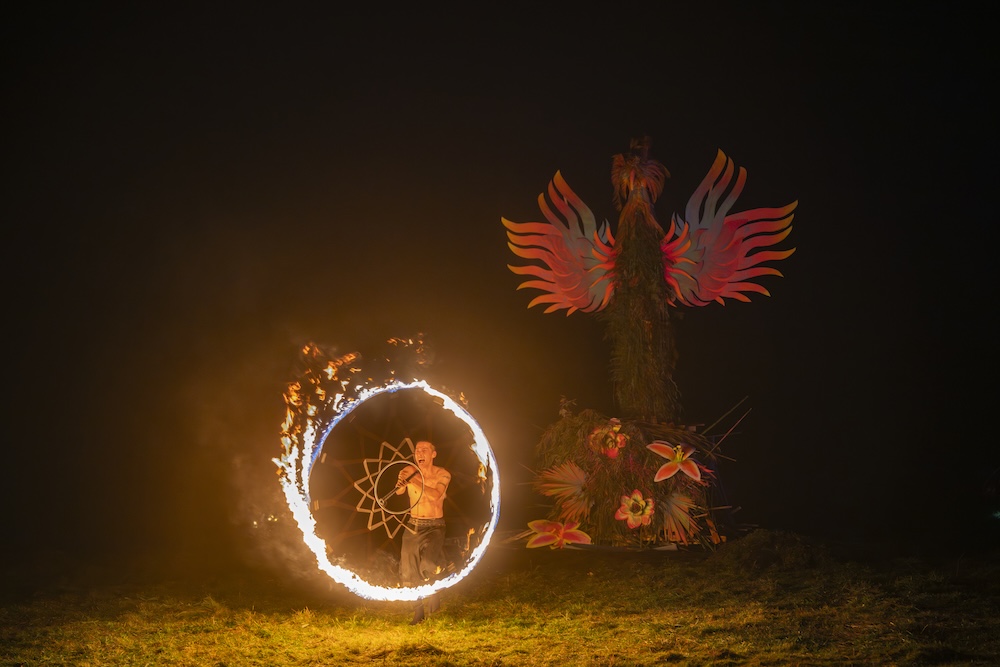
And then that experience really transforms into the nighttime. It transforms into the adventure out onto the deep playa. And you start poking around, and you start having more and more engagement with possibilities, with theme camps, with art, with all of these things.
And somewhere in there… and this is true especially true for virgin Burners, but you know, some combination of sleep deprivation, utter bewilderment, the continued derangement and in-your-face confrontations of all taboos and all social norms. Exhaustion. Possible psychedelic catalyst, possible, you know, encounters with art, encounters with the Temple, whatever, you know, just that sort of whole system assault on default reality and default selfhood.
And then somewhere in that Wednesday night to Friday sunrise, it feels to me like the kind of window of grace, you know, where if you’ve played your cards right, or just been broken down and broken open, then the third Burning Man shows up.
And the third Burning Man, potentially, is that unnamable initiatory experience. And is that, you know, what Philip K. Dick called, but goes back to the ancient Greeks, anamnesis, the forgetting of the forgetting. And some profoundly powerful, utterly unique to each of us, realization and breakthrough that arguably justifies all the rest of the hot and dusty ball ache.
And you know, there have been many years where somewhere in that Wednesday to Friday night… because you the city has to get going enough, right? There has to be enough built, there has to be enough of the art cars out on the playa to kind of reach that critical mass where if you’re deep playa, you, at one some point you look around, you’re like, fuck me, I don’t even know which way is the city anymore, because there’s so many lights and there’s so much kinetic motion, and you just kind of come unmoored and undone.
And at least in my own experience, and granted, you know, it could well have been augmented by all sorts of things, it feels like you can sort of even like witness, like these bubbling up, almost like upwellings in an ocean of sort of just like these rainbow technicolor wormholes to other dimensions. You’re like, shit, it’s popping off.
And everybody’s in on it, even if none of us could name it. And yet when it arrives, it is precisely the thing we have conjured on purpose, with no instruction manual, and potentially even without waking self-awareness that that was in fact the thing.
And that anamnesis is just like, shit, yes, I remember this from last year, or the last time I came or whatever. And that’s why I knew I had to come back. 360-day me has kind of dimmed my light and kind of forgotten that this is the reason I put a pin in this map, in my mind, soul, and Google Maps, to be like, you must return. That to me puts it in a category of among the most potent mystery schools that has ever been assembled on this planet.
Because you realize like all these gorgeous artists and all of these beautiful art cars and all of the musicians, just all of it, right? People spend so much of their life energy through the year. But it’s down to budgets, it’s half-failed projects, it’s weather, it’s collapses in team dynamics. Like it gets very gritty and very real and very human and very limited, and lots of frustration and lots of heartache, and many, many people are feeling like I just wanna give up. This is gonna break me. And yet we get to that magic moment where it all pops off and we’re all like, “Oh. This. This is the third city, the unnamable thing.”
And that and that’s what, at least in that essay, I was just attempting to signpost. You know, like we can’t name it much more than we just tried. To go beyond that is to make all three of us wrong, right? The Man, wrong; me, wrong; you, wrong, if we attempt to to define it anymore. And yet there is a there there.
STUART: I noticed you likened it to the Eleusinian mysteries. Larry liked to make that link too, and that not telling people what their experience was going to be was a very distinct and intentional part of it. But now that we’ve got forty years of stories and you know, an HBO documentary, is it possible to even consider this a mystery anymore when you can go online and find out everything that everybody ever experienced at Burning Man?
JAMIE: Well that’s but that’s the thing, right? I really do believe that ninety percent plus of all the discourse around Burning Man is captured by that first city and the second city.
Like even that HBO doc, because on the one hand, I was super geeked to see the archival footage and to see if there were any elements or or or stories and things that I had not come across before.
But it actually became a relatively organizational, operational, almost bureaucratic story of the last five years, because there was so much administration that had to be done. But it wasn’t about the mystery school. You know, in fact, if I felt like the closest that HBO doc got to the mystery school was its opening credits because it was where everything was popping off and it was this kind of phantasmagorical late night scene. You’re like, ooh, ooh, ooh, that, you know, like more of that please! You know, but what it is and how it emerged, to me, that is just endlessly, endlessly fascinating.
STUART: So how important do you think psychedelics are to experiencing this third city. And that’s absolutely one path to get there. Are there others to get to what I guess Erik Davis calls that hedonistic or hedonic ecstasy? How important do you think that element is to somebody experiencing that third city?
JAMIE: I mean, irrelevant, or essential. And, to me it would just literally be: What brain detergent do you need to let go of twenty first century normal?
And obviously Burning Man is a kitchen sink of ecstatic technologies, right? It’s everything from lighting design, to EDM with incredible sound systems to sexuality, to substances, to art, to all of those things.
If I had to lay my money on the things that have been most profound for me, the things I cherish that I can’t find anywhere else, you know, whether it’s Dead shows or Oregon Country Fair or, you know, whatever the more commercial spin-offs of this kind of thing are, is the art, and – and I feel like this is maybe waning, so I don’t know – but um, the profound humanity and archetypal theater of the theme camps and the city. Because however you do it, sleep deprivation, I mean all the techniques of ecstasy that have ever been used, including you know intermittent fasting, plus sleep deprivation, plus suffering…
STUART: Suffering’s big. Yep.
JAMIE: …those are perennial around the world. Suffering’s big.
And whether that’s Navy SEAL’s BUD/S training, just break you down to build you up, or whether it’s the ancient Spartan mystery schools of like flagellation and all, you all those kind of things, just overwhelm you, wear you down, until you might crack open.
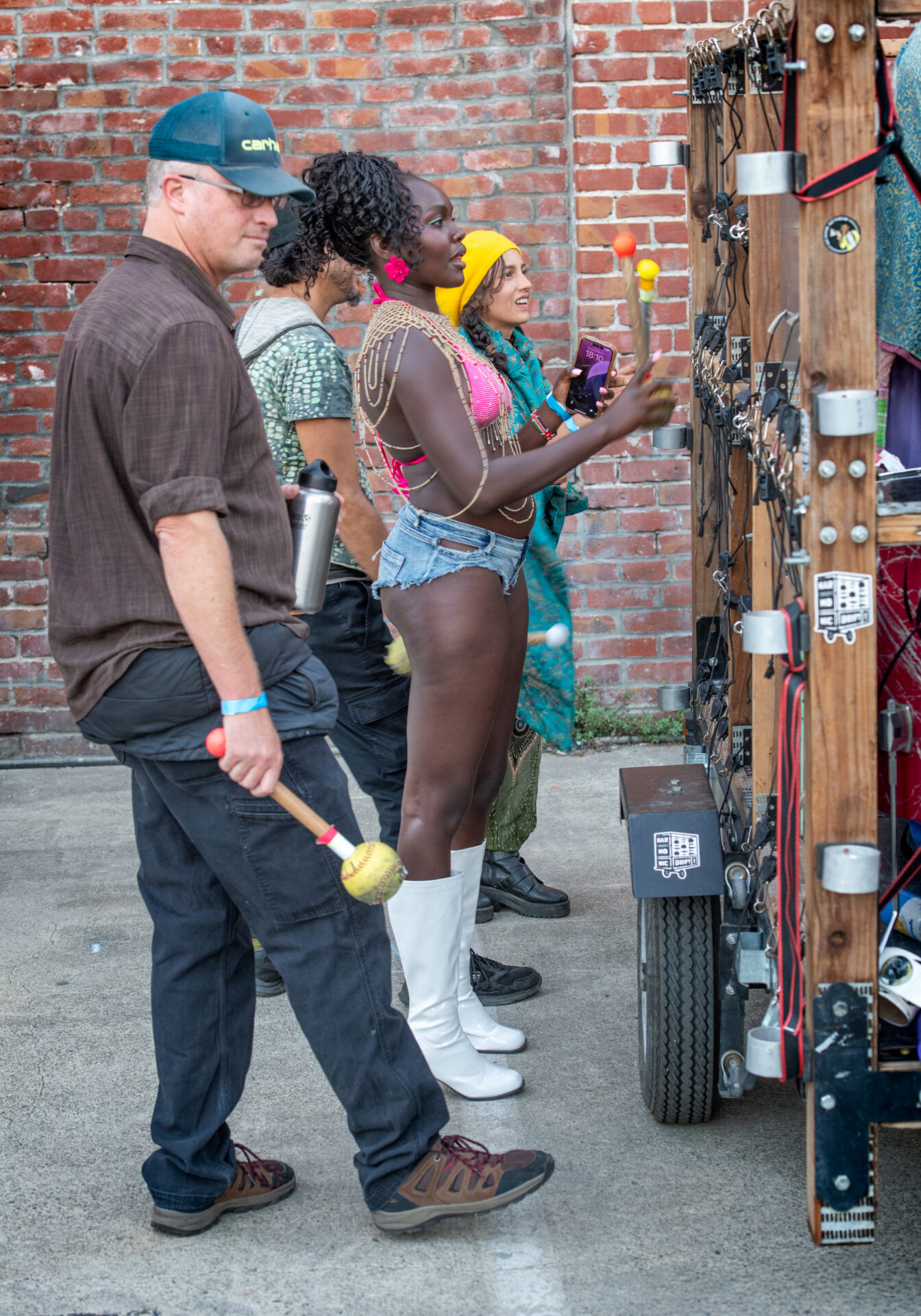
And the true, to me, the most, most unique pieces have been the profoundly interactive nature of the art. This is not staring at a wall in a gallery and having to read an artist statement about what the fuck those colors are supposed to mean, you know, and it’s really a commentary on decolonialism or something. You’re like, okay, I guess.
Burning Man art is interactive, it’s propulsive, it’s catalytic.
STUART: It might even be representational as much as out of fashion as that might be.
JAMIE: Yeah, yeah, yeah. And it’s kinetic, you interact with this stuff, you know, and there’s almost always a trickster punk twist, which I just you know, it’s forever knocking you out of dead center, self-aware, critical default mode network, and forever propelling you into just something zany, beautiful, utterly pointless, like the extravagance of the art, just brings you back to gratitude. And and and I would say the temple. I would say the art, the temple, and then if you have that third city moment where you really do find yourself cracked open and you’re like, Oh my gosh, I’m in utterly, you know, what is what’s the word? The new world, Terra Nova, like I’m in new terrain.
And then you come back into the city and everybody else is in on the same joke. And you get to interact and play with other people. And it doesn’t re – like there’s almost no failing. You can say something zany or goofy. You can be cracked out and just needing love and a good coconut water. You can be beaming, radiant, light-loving consciousness from your latest awakening. Everyone’s willing to play, and everyone’s willing to return serve. And to me, that is the most profoundly humanizing element.
STUART: Some would call that a psychomagical environment, right?
JAMIE: Yes.
STUART: And you talk about I love this phrase, a human-powered sigil, a magical object of geometry and intentions…
JAMIE: Let’s talk about the synchronicities at the Burn.
STUART: Yeah. Playa magic. It’s real. But why?
JAMIE: Exactly, right? And very few people would deny it. If you’re just like, synchronicity happened at Burning Man. And people are like, yeah, fuck ya, I’ve got half a dozen stories that’ll blow your mind ’cause they blew my mind. Sigils, yeah.
STUART: A sigil. I had to look that up actually.
JAMIE: So for me the curiosity came from, you know, back in the day, Dead shows, Oregon Country Fair, other gatherings like this, where that kind of synchronicity all also happened. And you’re like, okay, well, what’s the throughline? Well, clearly it’s groovy, counterculture, psychedelic crowds with shared intention and coherence. And it is not exclusively limited to that, but for sure, for sure a part of it.
So you see it at Burning Man emerging again, but now at scale, right? Like, you know, 50 to 80,000 people, not 10 to 30 or 40, and persisting for an entire week uninterrupted. So you’re like, okay, that’s an interesting thing.
And I think there was a UC Santa Cruz study, I don’t know if it’s still going on, but at least five to ten years ago it was, where they put radioactive isotope decay, like random number generators at the base of the Man, to see if there was a heightened increase in synchronicities based around it. And I think specifically focusing on Burn night.
STUART: I think results were inconclusive on that.
JAMIE: Yeah. It’s perfect, right? Which is perfect. It’s Schrödinger’s fucking cat, right? You just can’t do it. At least with the tools we have.
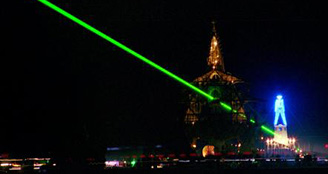
But, one year an experience I had, I think we bumbled out to the trash fence. And, you’re sort of looking back at the whole thing and taking in the whole thing, and you realize, fuck me, this whole thing’s a pentagram. The trash fence is a pentagram. The City is this, you know, Mayan calendar. The Man is at the center, and the temple is directly out from that. So you have this whole humming, thrumming, humanoid hivemind, juiced to the gills on ecstatic techniques. And again, they can be anything. They could be the breathwork, they could just be art and aesthetics, they could be… take your pick, but everybody’s running them all at highest octane possible. And somehow, if you just imagine this, that it just the whole city charges up and you can feel it, right? You can feel it building through the week and it reaches its crescendo Friday, Saturday nights, and it does what it does. And I can’t help but think that the sacred geometry of the space focuses and possibly even enables some of the more ineffable effects that come from that many hominids entrained, you know, playing the same game for such an extended period.
STUART: Let’s talk about the science a little bit because you cite in your book one of my favorite actually pieces of research about Burning Man, Molly Crockett and Daniel Yutkin’s study out of Yale from quite a few years back now.
You know, there’s good science there to say that people come away from the Burning Man experience more generous, more tolerant, more prosocial. and by the way, I had them on the program and they very intentionally left psychedelics out of their mix ’cause they didn’t really want to have to like baseline for that.
I’m curious how that extends to you know, to people’s outside lives, outside of the event space, particularly, you know, the dreaded going back to work. Is there any evidence that that experience makes you a better teammate, a better leader, that any of that translates into, you know, your work life?
JAMIE: Yeah, gosh, that, and I’m not… I have his book on my shelf somewhere back at home. There was a Stanford Business School, um but first white paper, and then a…
STUART: Oh right, yeah. Fred Turner.
JAMIE: Fred. Yes, exactly. But that was, you know, at least 10, 15 years ago. And he was starting to talk about prosocial collaborative environments, you know, and obviously that was sort of back before the bloom was off the Silicon Valley rose, you know, and everybody was like, giddy, ‘Don’t be evil,’ ‘Let’s make the world a better place’ kind of stuff. In the before times.
But I think there clearly was within that relatively localized, high crossover of Bay Area companies and organizations, and attendees, that loop appeared to have translation. It appeared that the ways people came together to build camps, and the experiences they had on the playa, you know, were recursive. They were both informed by the groups and social networks and peer networks of people in the Valley. Ad, they were sort of, you know, there was a mutating flywheel of what people were learning in different environments and bringing back to the other one.
As far as some poor sod from Poughkeepsie, you know, who comes out to Burning Man and has their mind blown open and goes back to an insurance company, you know, the, you know, on September 1, those were probably much harder integration experiences. And my guess would be: dominant culture structures prevail over someone coming back and shifting the system that they’re in. So I think a lot of it would just be kind of critical mass.
That’s not to say… I think many people would report, you know, along with Molly, Molly’s research, you know, on that “Oh shit” metric of personality assessment, you know, the kind of the big five, that there may well be
- greater openness
- greater conscientiousness
- greater empathy
But how long it persists as people try and fit themselves back into default world personas, roles, expectations, games people play, I think that’s also probably why so many people make an annual pilgrimage of this…
STUART: Right, to recharge.
JAMIE: Yeah, like I need to remember. I know I’ve forgotten. I can’t remember what I’ve forgotten, but I know I have.
STUART: I need to unremember my unremembering. Yeah.
I ask because, you know, the book Stealing Fire is very widely taken as a you know, as a leadership tome. and I’m just wondering what sort of lesson’s in there. I got one right off the top. I love that you managed to kind of put high functioning military teams like the SEALs side by side with Burning Man. What does DPW have to learn from Navy SEALs and vice versa?
JAMIE: Gosh. Well funnily enough, actually, Bernie Cahill, who’s the manager for Dead & Co. had read Stealing Fire. And when we got to connect at one of the shows in Boulder, he’s like, “Bro, VUCA conditions, that is my life!” Right? I’m, you know, on tour dealing with all the things, dealing with all the personalities, etc.
STUART: What is VUCA? I’m sorry.
JAMIE: Oh, sorry. It’s the military term for ‘wheels off shit shows.’
Volatile, Uncertain, Complex, and Ambiguous conditions.
STUART: Yes. Thank you.
JAMIE: Which is the Burn in a nutshell, which is DPW’s work and role, writ large. And so what I would imagine, and I and you know, I don’t have I haven’t interviewed any of the DPW crew and all that kind of stuff, but what I would imagine, is that there is little recognition for resume credentials, and that there is high regard for the people who have been in the trenches year in, year out, and that your mettle is tested and your respect is earned by: Can you keep your shit together in the shit show?
And that is pretty much identical to how SEAL teams work. Because SEAL teams, for instance, you don’t get the squeaky, shiny officer from Annap… fresh out of Annapolis running the thing. You have your chief petty officers who’ve been the guys with the guys, right?
There is no respect for anything other than, can you keep it together in high stakes, high stress, completely, you know, wheels-off conditions? And that’s how we measure. Right?
And also, can you delay binding decisions until the last possible moment so that you have the most information possible, versus trying to run a playbook that we put together two months ago, before the rain came?
STUART: With no situational awareness because there’s no situation yet. Yeah.
JAMIE: Exactly. And so I think that there’s an extremely high crossover. And as much as anything, and this is true in outdoor guiding as well, so I would say any kind of high-stakes leadership, not just where it’s PowerPoints and boardrooms, and everyone’s just pretending. But high-stakes stuff like the playa, like downrange with special operators, or alpine environments, ocean environments.
Tom Wolfe wrote about this actually, I think brilliantly, in his book The Right Stuff, all about test pilots and and NASA, which was, how because of Chuck Yeager, the first test pilot who broke the speed barrier, because of Chuck, who was born and raised West Virginia boy, there became, all through the airline industry, because they were all ex-military guys, this kind of classic…
STUART: Everybody talks like this from the cockpit!
JAMIE: super casual country draw!
“We’re just experiencing a little spot of turbulence here. You just, you just buckle up, hold on tight, we’ll get you through to some blue skies soon enough!”
And meanwhile, it’s fucking crazy and they’re in a lightning storm and it’s like all over the place, like, that’s the guy.
I would imagine again for DPW and all these things, which is:
- Can you keep your cool?
- And can we keep on the bit? Which is that this is all fine, and this is good?
- And can I maintain that relational thread with the people I’m trying to lead?
One of the Team Six commanders that we interviewed for Stealing Fire, he would explicitly say he called it, they called it starfishing, which is when things get crazy and things aren’t going according to plan, and then everybody breaks away from collective group flow and starts trying to solve for things themselves. He’s like, that’s when people die.
And so he would make a point of like, just lowering his weapon. Everyone’s on headsets, so everybody’s got comms in their ear. And he would just walk right into the hottest spot in the firefight, knowing that if all his guys were watching him, they’re like, “Oh, shit, okay, he’s got it, so we have it.” And that’s very nonverbal.
And again, I mean, I would imagine that, whether it was the, you know, the rain, the mudpocalypse, or the heat events in the prior years, or you know, that there’s a thousand things that have come up in the dirt, in the dust, can the leader maintain that conversational, playful thread? And if they can, then everybody else calibrates, just as kind of tribal primates. “It’s okay. We’ve got this.”
Whereas if they break, and you can hear the tightness in their throat, this kind of, if anybody’s familiar with like Stephen Porge’s polyvagal theory, you know that sense of like the first thing we do as monkeys is, “Are you safe?” And much of that is actually just vocal tone. So I feel like there’s an awful lot of just embodied leadership.
Can you clock off me like a metronome?
Is my nervous system stable, safe, inviting, confidence inspiring?”
And then there’s the, now up above the neck, now how do we do the kind of Bayesian analysis and decision making, which is based o:n we never have the full set of information. We’re always having to decide with less than we’d want, but we do have to decide. Time’s up. Right?
But we’re not gonna… there was an old Burton Snowboards sticker that I love. It says, “Feel the force, don’t force the feel.” And so feeling the force is a fluid, dynamic, constantly emergent thing. And I think many leaders lose credibility with their people, with their teams, when it’s clear they’re clinging to an old playbook, right? And that page has been ripped out in front of us. So can we modify and adapt?
To The Org’s credit and to everybody who shows up to build stuff, I mean, that’s the container, that’s the crucible.
STUART: So I’m wondering if there’s a minimum effective dose of this magic. Black Rock City is, I can see it hitting critical mass. We have seventy thousand ish people, we have all this, and what about smaller gath… Is there a way for people to have some of this state of change through a smaller engagement?
JAMIE: I mean look, the smallest engagement, you know, go on a full moon or an equinox or a solstice or a meteor shower and backpack up to some beautiful backcountry hot springs with like three or four people you dearly love. You know, like that totally works, right? And in some respects it is simpler and less prone to contamination, if there’s just less variables in the mix. just big nature, God’s cathedral, you know, the womb of the earth and a hot spring and your friends for a few days.
STUART: Yeah, I agree with that. The camping aspect of Burning Man is underappreciated, I think.
JAMIE: Yeah, absolutely. And you as a lifelong outdoor guide who spent, you know, we would teach LNT, thirty years ago, you know, just in the actual wilderness, because it was required and it was part of having permits and traveling in that land. I do think that the desert, spending nights out, spending nights not in your own bed, seeing stars, seeing sunrises, seeing sunsets, those things are absolutely part of the magic that regrounds and re-centers people.
So it’s this kind of paradox that it’s the most otherworldly place you could possibly gather, right? And on the other hand, it is deeply re-mammaling us, and putting us back in our skins on this earth. And if you haven’t had that experience, if you haven’t just been in the wilderness for a month at a time, and you’ve only ever been inside boxes, conditioned boxes with flickering lights and electrical stimulation, that alone is a subtle thing to your point.
But there is a weird one, because you phrased it in an interesting way, right? You said what’s the minimum viable or effective dose? And I do remember back in the day when Tony Hsieh was building the Downtown Project, and he invited a few of us to come and kind of check it out and see how it was going, and I think it might have been Kristen Ulmer? There were a hand… he had bought a couple of art pieces from the playa. One was the giant praying mantis, and then and then one or two others.
And I just remember looking at it, and being like, huh, this doesn’t work outside of its natural habitat. This feels like a curio. It doesn’t feel mind-blowing and transformative. You know, absent the vastness of the playa, absent hundreds of other bits of amazing art popping off all around it, it felt like the kind of thing a tourist would just take a picture of.
And, Michael Beneville and the crew who did AREA15 in Vegas, they brought in, I think, the Tree of Tenerae and several other. So again, very vibey, very Burner, but outside of its context, and non-initiates, aka Vegas tourists, rolling through there without some version of critical mass, container, and cultural road rules of how we play this game. So again, those things, in and of themselves, they feel that they can be diluted and even distorted in their impact by being taken out of their initial context.
STUART: Yeah, that’s how I felt when I saw the Smithsonian exhibit of Burning Man. There was a lot of wonderful art there and a lot of great people, a lot of really great introduction of people to the Burning Man world, but what kind of broke my heart was to see David Best’s temple inside of like a ballroom. That was an absolute fail, as far as I’m concerned, for expressing the majesty and the spiritual power of what a temple could be. It was just walls.
I want to talk more about exporting this to the default world. You talk about, one point about a three part, three point program of — What is this? —
- extasis without the crave
- catharsis without the cringe
- communitas without the cults
What do we mean by the crave, the cringe, and the cults?
JAMIE: This was in the sequel to Stealing Fire, Recapture the Rapture, which I wrote because I was just sort of you know curious of like, okay, Stealing Fire is just making the case: Hey kids, there’s something fun on the other side of the river. And Recapture the Rapture was like, hey, here’s maybe how we build advanced base camp.
But of course, back to that, no one tells you what the Man means, right? No one should tell you what cutting, you know, transformational culture ought to be. But here’s the building blocks. Here’s Legos, here’s Linux, here’s whatever.
My sense is that there are three legs of that stool. If you’re trying to build transformational culture, it would be healing, inspiration, and connection. And if you want to get, you know, fancy and use the Greek, it’s katharsis, the healing, extasis, the peak states, and communitas, that sense of being deep connection, and gathering together that the Shakers have talked about, Shakers and Quakers, you know, lots of people have talked about and described this stuff. That’s Victor Turner’s University of Chicago term for it. So healing, inspiration, and connection.
But inspiration, aka ecstatic technologies, are addictive. They fucking feel great. And if I have access, the little rat with the lever, if I have access to more, very few of us pump the brakes reliably, responsibly, and in time. So can we, as Robert Anton Wilson said, can we become hedonic engineers? Can we not just chase the highs, but can we actually learn to tune our bodies and brains to affect our hearts and minds?
And he actually has a great line. He says hedonic engineering, the act of intelligence studying itself to make itself more intelligent. Why be depressed, dumb, and agitated when you can be smart, tranquil, and happy? So you’re like, yeah, let’s do that!
But you start playing with all those reward centers, and most of us, because we are just little tribal monkeys, don’t have restraint, and we end up with the crave. As soon as it’s fading, we want more. We’ll double down. We’ll go chasing it. So that can create hell realms right after you’ve just soared angelic. So can we learn to be hedonic engineers, not just bliss junkies? That’s the ecstasis without the crave.
Then can we experience deep healing, profound vulnerability, honesty, without it all turning into a fucking cringy, talking stick, cuddle puddle, therapy talk, you know, waste of time and space? Is it possible to just be a real human with again, profound vulnerability, but also dignity, and an awareness that the real stuff doesn’t need to be therapeutized or buzzworded? It’s not about my attachment styles, or my Internal Family System voices, or whatever’s the latest flavor of the month. It can just be, “Fuck me, man. I hurt. And I’m also filled with love and inspiration in this moment, forgiveness, connection, atonement,” whatever it might be. And can we just get back…
I mean, I always propose: Weep, don’t whimper. And that reaches everybody. It doesn’t turn people off because they’re not part of that subculture with that specific language or lingo, you know, or talking sticks or feathers or whatever, right?
And then the final one, communitas without the cult. Because when you have peak states, the ecstasis, they often come with catharsis, some opening, some new insight, some additional information, potential healing. So we’re like, oh, fuck, I’m cracked open. I’m flying high and/or completely raw with all my boundaries down. And I’m probably not doing this in a phone booth by myself, right? I’m in relation and connection with others. And in that, there’s this ooey gooey mind meld, which is also profound. Holy shit, whether it’s a sunrise at Robot Heart, fill in the blank, you know, Mayan Warrior, you know, you those kind of moments, or it’s something more intimate, you know, late night in a camp with a handful of folks. And then there’s that sense of like, my gosh, I’ve been living most of my life as a deconditioned zoo animal, distracted by a cult of hyper-individualism, and I’m lonely and I’m scared and I’m tired. And oh my god, I just found my people. That is amazing.
Now this is the thing, right? Often there is someone, or a handful, of people that have some superpower, or city, or dharma and good intent, that have helped create that field, right? And that have helped precipitate that group coherence. And it is sadly, distressingly rare, that they don’t get bent by that power, and or misuse it. There’s a, I always think of this quote from the Roman philosopher Ovid, because it sat in my Latin classroom in high school, and it says, “Who, looking down on twenty or thirty upturned, shining faces, doesn’t say more than he knows?”
STUART: Haha.
JAMIE: So how do we do this? How do we shoot the moon without becoming junkies? How do we strip down our defenses and also honor our wounds? And how do we merge with each other without losing our agency and integrity?
So that’s the problem space, right? That’s kind of where for the last 50 to 75 years, most countercultural movements have put it in the ditch. And that’s Osho and the Sennyasins, that’s Leary, you know, that’s Adi Da, Chögyam Trungpa, but take your pick, right? If you had some transmitting humans that got everybody into state, it rarely ended well. Sex, money, power, you know, pick two.
So can we become hedonic engineers instead of bliss junkies? Can we weep but not whimper, and just kind of embrace profound cathartic healing without fetishizing it or making a meal of it? And then in the communitas without the cult, can we learn to become jazz musicians, not, you know, members of a marching band following the guy up front with the funny hat and the twirly baton? Can we actually practice, you know, stay, you know, keeping the beat, here’s the pulse, here’s the groove, playing our part, but not giving up our center?
STUART: That idea of being a jazz musician really speaks to me. That’s when I think about what leadership means in our world, which is so volunteer driven, so intrinsically motivated, so it’s so absolutely inimical to think about a hierarchical, you know, power structure for that. People don’t want to be told what to do. But they want somebody to support them in what they do.
Leading with, you know, some sort of humility and leading by example, which you mentioned earlier too. It’s like the best way to teach people to pick up MOOP is to pick up MOOP in front of them, not necessarily shaming them, but to just make it look like it’s an ordinary thing that everybody does, including you.
JAMIE: Yeah.
STUART: So Silicon Valley has changed a little bit since you wrote Stealing Fire. Tony Hsieh is sadly gone. Elon Musk is, we don’t know where he is anymore. Is Silicon Valley still revolutionizing the way we live and work, or is it just a bunch of billionaires in bunkers?
JAMIE: Billionaires in bunkers and million dollar art cars.
Stealing Fire came out in 2017. That was more or less the 30th anniversary of the Burn.
STUART: Ten years ago. Yeah.
JAMIE: And I think I gave a talk at Red Lightning at the time.I was thinking a little bit of Ken Kesey’s Human Be-In thing where he kind of just blew on his harmonica and said, Fuck it, right, and just like walked away. Kinda like when they did, when the Yippies did the death of the hippie coffin down Haight and all that kind of stuff. And it was sort of my rough effort.
I was like, guys, thirty years, it’s been a great run. It’s only downhill from here. And the world needs us. Let’s go build this shit in in 3D. And obviously that hasn’t happened in real life, but a surprising number of people have been like, “Dude, I was at that talk, and you said that thing.” And then they could come back to me later with it. But the idea that Burning Man was better on the next year…
STUART: “It was better next year.”
Yeah, exactly. It’s a joke, it is itself a Burning Man trope, right? I remember Caveat Magister did some great pieces on that.
STUART: “Who Ruined Burning Man?” Yeah, that’s one of my favorite essays of his.
JAMIE: Was it when Goa Gill came, and the EDM scene, and the sound camps?
Was it when we couldn’t drive our cars and shoot our guns in ‘96?
With full acknowledgement of that, typically, the trickster answer is: Never. You just got here late and you’re a NIMBY trying to close the door behind you and nostalgia is always rose-colored in hindsight, etc.
I would say that there have actually been a few structural things in the last decade that are actually material to the core vibe. Because obviously what was, what was part of the genius – and again, some of this comes from my experience like designing and guiding outdoor courses, where if people have access to hotels, or vans (and this is even before cell phones, right) it completely prevented them from dropping in. They just wouldn’t. They’d just be little shitty brats. If they could still go to the convenience store and get candy, if they could still call their parents, whatever, it just sucked. You never got the coherence of actually being in the woods for a month.
So the pilgrimage to the dirt, and how hard it is to get there and how remote and isolated it was were all part and parcel. It was a filter for who could come or chose to come. And once you were there, it was a crucible that didn’t interact with the outside world. And then somewhere in that 2016 to 2018 realm, you started seeing, hey, there’s a few more cell antennas, and then Starlink, and then the kind of Instagram podcast universe.
And so those intersections, probably 2017, 2018, it was like a Thursday night and it was some good DJ and suddenly there were some suspiciously clean people showing up for the thing and then popping up their phones to take images of the DJ. And I was like, oh and it felt so off and so other. There was none of the neighborhood vibe. There was none of the interaction…
And I would say that the mud burn was the first time it went completely recursive. So it used to be, you know, everyone, all your friends went dark. Ten days later there was this photo dump if anybody even bothered or remembered to take photos. Then there was a little bit of twittering and this and that in the build date weeks when there was still signal and then it all kind of went quiet again, same kind of drill.
And then it became real time in the mud burn, I really, really noticed. People were posting updates, you know, FEMA and floods and drama, and this and that, and yet they were posting it from the playa. It was going into the default world. The default world was interacting with it. And then people on the playa were reacting to the reactions and then posting again.
And so in some respects, there was a critical seal that was broken that year. And I’m unclear as to whether it, you know, what happens, just as this is a petri dish, what happens with that contamination? I don’t think it’s good stuff.
If you actually feel the vibes, there is exactly happening on the playa what’s happening writ large in society, which is a separation and segregation, increasingly asymmetrical spend on one half of the divide while the punters get the leftovers. And I hope that doesn’t persist. I don’t know how it reverses.
I have skin in this game, and I love this community and this experience and I want it to thrive again…
We’re dealing with this all over the world: Europe, the American West. We’ve got too much dead wood in the forests, and the solution is a fucking crown fire.
STUART: That’s a little more radical of a solution than I was expecting to hear…
JAMIE: And you’re like okay. This is somewhat of a stitch up, like the counterculture, you know go back to the 80s and 90s were the origins of this and the Cacophony Society and you know which begat, which begat, which begat… This goes back to the Diggers in the Haight. This goes back to the Dead family. You know, this goes back to Kesey and the Pranksters, right? There’s this unbroken chain, right, of Bay Area radical counterculturalism.
STUART: Fuckery. Yeah.
JAMIE: And in some respects, that’s at risk.
And Larry, bless his heart, right, said, hey, Radical Inclusion means accepting ultra-rich people too. Right? And you’re like, yeah, totally get it. And on one level of just humanism, absolutely. Shouldn’t just be an eat rich situation.
A lot of the Oakland warehouses, you know, a lot of the kind of the Opulent Temple. I mean, some of the best stories I’ve ever heard are like badass women collectives in the East Bay who were teaching and training each other. And…
STUART: Still a lot of those around. Shout out to Flaming Lotus Girls.
JAMIE: Yes, yeah, exactly. It’s just gorgeous because like who doesn’t want to become more capable and crafty and learn cool shit as an adult? It’s makerspaces and all that. But it was also like, hey buddy, don’t come in and start mansplaining to us. We know what we’re doing. And if you want to help, thank you, but take a number, watch and learn. Thank you for being here, but slow your roll. You know, we have a way of doing things. And if you want to help and listen and learn, you’re welcome.
And I feel like that vibe for whatever you might say is kind of core multi decadal Burner culture of makers and builders and creators, and crazy trickster performance artists and you know all the freaks and misfits.
I mean I guess the most, it was Vinkatesh Rao. I think he writes he you know he I mean he’s probably writing on Substack now, but he’s written interesting things about the internet and this and that. And he had a great model which is: Every countercultural movement goes through four phases.
And the first is the artists. First come the artists, and they’re doing it purely for the love of the game.
And then come the Mavens, and the Mavens are the high net worth cultural people who have made an identity and even somewhat of a practice of spotting the next bright thing.
STUART: Gallery owners, for instance.
JAMIE: Gallery owners, the Mavens, right, they love to spot, sponsor, and endorse. And that was Larry and Sergey, that was Elon and Kimball back in the early days, right? They were there, they were early… Full hats off. They saw this fucking thing, they’re, “This is badass. We’re all in. And we want to help it grow and be more of what it is!”
But then come the carnies or sociopaths. And those are the folks that are like, Oh wait, these artists have hatched something novel and new. These mavens have added social cachet and capital. There’s this thrumming thing here, and I’m drawn to it. And I’m looking around, I’m seeing lots of other people drawn to it as well. And if I can fucking slip past the velvet rope, and I can pass myself off as either an artist or a maven. If I wear the costumes, I know the lingo, right? But really I’m looking to extract from this scene.
And that would be the people who you know spun up huge turnkey camps and it was like 50k to 100k to come, or it’s me doing my schmoozy networking, and I can promise my square but rich and powerful friends, I could I can sort of parlay that I’m the Sherpa to get them into this experience. And that’s the carny, right? They’re looking to fucking flog tickets to the big top.
And then they turn around and invite the tourists. Because after there’s enough of a there there, there becomes the cachet, the first Burning Man, the first city, the second city, right? There’s buzz, there’s hype, there’s media.
One more model would be the early adopters crossing the chasm to the early majority and the late majority, right, that kind of innovation cycle, right, of like what happens.
Burning Man has its princip… you know, its Principles, it has its lore, right? And there are kind of these sort of guides and checks and balances for, oh, if I’ve just been cracked open, if I’ve just been born again, baptized, you know, in the fire, then how do I behave as a newborn or a twice-born? How do I show up? And then everyone kind of models it for each other, right? And there’s this kind of beautiful, doesn’t need to be said, but we can all know it and feel it, a sense of positive acculturation, right? Where I learn how to do that.
STUART:
I think it’s still possible for people to have transformations out there. And I see it every year. And that’s actually the reason why I keep going. As I see people who got there the wrong way for the wrong reasons, following the wrong story, and it ends up changing their lives. So until that stops happening, I’m gonna keep on going and keep on working on it.
JAMIE: Yeah. And, these things have crazy amounts of inertia. Like Burning Man is potent beyond all belief. So even if you wanted to like, be like, it’s at 85% percent of full strength, da da da da. It doesn’t like get into the center of that thing, it’ll still blow your mind, rock your world.
My hope would be that the shuffles and and the and the and the discombobulations of the last, you know, basically COVID through Mudburn to now, might have just been just enough, you know, to kind of shake off any calcification and to raise the bar slightly.
for people wanting to come and therefore sort of earning their turns, right? Like sweating their prayers, and that there is some novel next bubble up, you know, of whatever this subsequent generation looks like.
STUART: Well I think we agree that it all starts with wanting to come, so… It is a strange post COVID world where people don’t want to go outside, they don’t want to go camping, they don’t want to do anything, right? So how do we attract people who haven’t already decided what it is, and made up their mind to not actually be there?
JAMIE: Yeah, I mean, we were actually having a conversation with some of the folks that are actually advising the Org right now on that, which is that whole generational succession thing. How does it seem relevant for late teens to twentysomethings? and not something “Okay Boomer,” or they just have their own versions or they’re just staying home and thumb scrolling.
And my sense would be, the best way possible is invitation to co-creation and participation. So whether it’s Lamplighters or whether it’s camp builds, or whether it’s a feeder program. We have a bunch of friends in our guide community that teach wilderness medicine, and then several of the instructors are also Burner medics. And you know, the ability to be like, hey, you just got your wilderness first responder credentials. We have a pipeline for young medics, we have a pipeline, you know, for makerspaces and builders, just the getting to do real things in a multi-generational community and be seen by elders and held by that community.
I mean, Maria Montessori, right, of Montessori Education, right? She said, adolescents need two things in this world. They need to know “What I am good for?” and “What am I good at?” And I think Burning Man, as so many people testify, especially artists, builders, you know, that kind of stuff, they’re like, it gave me a sense of competence, it gave me a sense of worth, it gave me a sense of community. And if we can get that to these next generations, then I think that that pipeline becomes a siphon and there’s no shortage of folks that need those nutrients.
STUART: I didn’t know that Maria hit two out of the three of the trinity of course: competence, mastery and belonging, right?
JAMIE: Yeah, yeah, yeah.
STUART: But who doesn’t want to look back on a life well lived to think about “I was good at something. My work made a difference. And somebody loved me”? If you can check all three of those boxes, congratulations. You win the prize.
JAMIE: Yeah.
STUART: So are we making an evolutionary leap, Jamie, or are we just stuck in the mud of survival? What’s the prospect for the human race? It’s hard to read the signals anymore.
JAMIE: Yeah. Yeah.
I mean in some respects I feel like there is this kind of collective schizophrenia. Like it’s really hard to know what’s going on. There is a sense of heartbreak. I’m pretty sure some things aren’t going great.
And then this kind of cognitive dissonance of, but wait, I look to Jordan Peterson, or I look to Elon Musk, or Greta Thunberg, or you know, take your pick. And they’re saying completely irreconcilably opposite things. So you’re like, how am I supposed to make sense of this?
And, you know, let’s say twenty, whatever, take your pick. You know, Pax Americana, World War II, and Bretton Woods, you know, night nice relative stability in the world. We’re on this happy, progressive curve. You know, MLK says it; Obama, you know, “The moral arc of the universe is long, but it bends towards justice.” And then that goes all the way through everything from civil rights and desegregation to Beyoncé and a black president, to IPC, Paris Accords, and climate, to UN humanitarian aid.
And we’re like, yay, humans, we’re doing this, man. We’re moving towards a post-racial, multicultural society. We’re gonna transition off carbon. Everyone’s gonna be driving fucking Teslas, and there’s gonna be like, gay luxury space-based communism, and solar punk for all of us. Fuck yeah, we’re gonna do this. It’s gonna be hard, you know. We’re gonna have to make some trade-offs maybe here and there, but we’re gonna pull this off and we’re not, and we’re actually gonna get to have most of our cake and eat it, if not all of it. We’re gonna cure cancer. We’re gonna end poverty. We’re gonna do all this stuff, and it’s gonna work!
And then the kind of death eaters took over the show: Empathy is toxic. The climate change religion is a psychosis and a delusion and a stalking horse for a new world order, you know, et cetera, et cetera, et cetera, et cetera.
So there’s that question of just like, oh fuck. Um. It felt like we had a decent shot at it but we knew we were on a timeline, and this current whatever-this-is feels like it’s just burning the next 30 years, which is the last 30 years we really had. And we’re just basically just compressing and removing choices and optionality for healthy pro-social intervention.
So it feels like we’re gonna take this on the goddamn chin. And whoever survives impact will be building what’s next.
And I wish to God it were not so.
STUART: So does Burning Man have a chance of offering an alternative to that fucked up situation?
JAMIE: Yes. Absolutely.
And that’s what I chose, tried to really foreground in Stealing Fire, which was not the whiz-bang party stuff, really not a whole lot of what we’ve actually been riffing on. It was much more, hey, Black Rock Solar, Burners Without Borders…Right? If this is a sandbox for the future, it’s: How on earth do you create celebratory, transformative, healing culture in the most adverse conditions possible? And we’re practicing. And we show up for a week or a month on the playa every year and we practice infrastructure. We practice community support. We practice mutual aid. We practice food, clothing, and shelter. We practice worship. We practice celebration. I mean, in some respects, I would say it is the hope for the future. Everything that Burning Man is about, and everything that makes it so impossible and so hard, right? Is really we just raised the bar while things were still relatively cushy and began training for 2050, right, in 1986.
STUART: That seems like a great place to go out. I would like to continue it, but you’re not going to the desert this year.
JAMIE: But we are sending our dear son with the dear, dear hope. And he’s going early for build, to help build one of our dear friends’ camps. And yeah, and all of our hopes, right, are for him to get to experience and learn and grow from all the things that we’ve just discussed.
STUART: Fantastic. All right. Thank you, Jamie Wheal, for joining us today.
JAMIE: Yeah man, thank you for having me and I hope everybody’s having a blast wherever you’re listening to this.
STUART: It’s been a great conversation. Thanks again.
Alright, Vav… Michael Vav.
VAV: Thanks, Stuart. Thanks, Jamie.
Burning Man LIVE is a labor of love from the Philosophical Center, one of the program areas of the public benefit 501(c)(3) Burning Man Project.
Please pay it forward? Collect coins from couch cushions. Check your playa pockets. Dig down next to the driver’s seat. Donate any amount to DONATE.BURNINGMAN.ORG
We’ll keep making ad free video podcasts for you and those you pay it forward to.
By ‘we’ I mean our team, Andie Grace, DJ Toil, kbot, Martn, Stuart, and Vav-Michael-Vav, that’s me… and our Communications pantheon.
And, thank you, Larry, for starting all this.




![Andie Grace, arms crossed
]](https://burningman.org/wp-content/uploads/2026/08/Forums-Photo-by-Espressobuzz.jpg)


'/%3E%3Cpath d='M0 0 C4.29 0 8.58 0 13 0 C13 4.62 13 9.24 13 14 C11.68 14.33 10.36 14.66 9 15 C10.3089572 18.12197478 10.3089572 18.12197478 13 20 C12.67 21.32 12.34 22.64 12 24 C6.94489444 23.55396127 4.59833262 21.35299176 1 18 C-0.59412284 14.81175432 -0.10174735 11.37103338 -0.0625 7.875 C-0.05798828 7.12089844 -0.05347656 6.36679688 -0.04882812 5.58984375 C-0.03703499 3.72652873 -0.01909942 1.86325445 0 0 Z' fill='%23534BE6' transform='translate(0,0)'/%3E%3C/svg%3E)