

There’s a world of civic hacking where “making cool stuff” meets “making useful stuff.”
Hear tinkerers, gearheads and other makers share about the inventions that won them Burners Without Borders Civic Ignition Grants. These grants are little sparks that fire up the next level of open-source technology for all of our community, and for all the world.
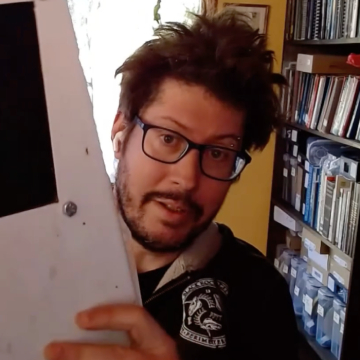
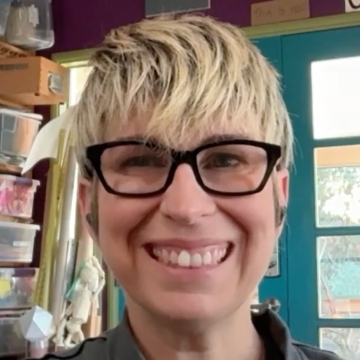
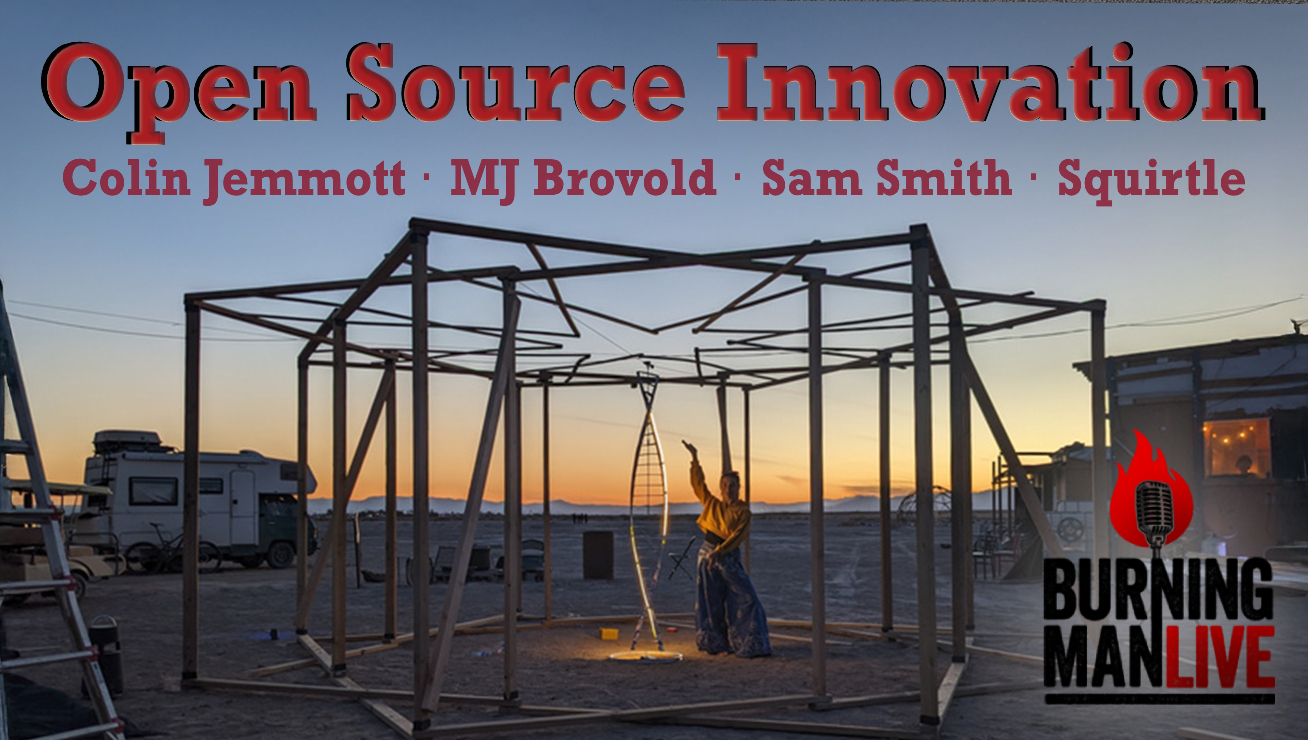
Colin Jemmott and MJ Brovold of YOUtopia, the San Diego Regional event, share about their low maintenance light source that’s sturdy, solar-powered, and buildable by anyone. They’re also building a huge steel pop-up book!
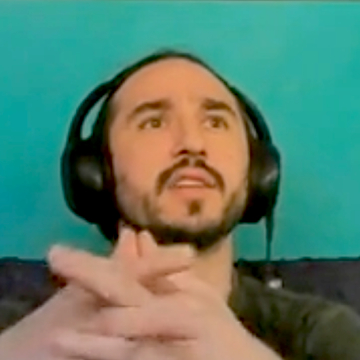
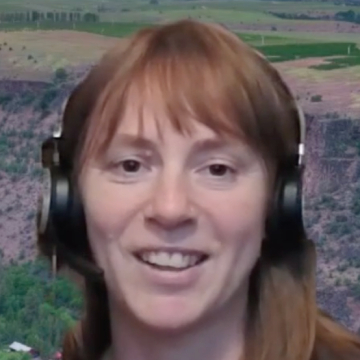
Sam Smith and Squirtle of SOAK, the Portland Regional event, share about their deployable solar shade pavilion made of star-shapes and scissor linkages. Trash eating robots are involved, and 3D printed ‘precious plastic’ art.
This is not about the party. This is about practicing for a future where we won’t need to poison the planet to self-express.
These stories are a recipe:
· One part ‘for the love of it’ spirit
· One part skills we already have
Blend until smooth.
Enjoy what new ideas can happen when we all put our heads together.
burnerswithoutborders.org/2025-regional-event-grant
Transcript
MJ:
As people who make things and as artists, the reason we build big things is to bring in the community. So for us, the community-building and making things accessible is just really at the foundation of most of our projects. We just have an interest in removing barriers for other artists.
Meet the people who make Burning Man happen around the world.
The dreamers and doers. The artists, freaks and fools.
Burning Man LIVE
STUART:
Hey, everybody. Welcome back to another episode of Burning Man LIVE. I’m Stuart Mangrum, and today we’re diving deep, deep into the world of civic hacking, desert-proof engineering, and the intersection where “making cool stuff” meets “making stuff actually work.”
You know, we talk a lot about the big art, the 40-foot neon sculptures, the fire-breathing octopi, but there’s a quieter revolution happening in the dust. It’s led by the tinkerers, the gearheads, the inventors, by people who make things; the folks who look at a diesel generator and think, “We can do better.”
Today, we’re talking to some of the latest recipients of the Burners Without Borders Civic Ignition Grants. These are micro-grants, little sparks that fire up the next level of open-source technology for all of our community, and for all the world.
First up, I’m gonna talk with Colin Jemmott and MJ Brovold from Glass House Arts, and YOUtopia, the San Diego Regional.
They built a light source that’s solar-powered, environmentally friendly, and perhaps most importantly, strong enough to use as a bike ramp. It is a low maintenance way to light up art in the deep playa.
And they’re open-sourcing the design so that any artist, whether they have a CNC plasma cutter or just a workbench in their kitchen, can shed some light on their own creations.
Then, I‘m talking with Sam Smith and Squirtle of SOAK, the Portland Regional. They’re developing a deployable solar shade pavilion that looks like a piece of high-tech origami. Imagine a structure based on “scissor linkages” that expands into a star shape to provide shade while soaking up enough sunrays to replace a generator, a noisy, fumey, finicky light tower generator.
Sam also tells me about trash-eating robots and a 3D printer that turns recycled plastic flakes into large-scale art.
It’s not the party; it’s about practicing for a future where we don’t need to, you know, poison the planet to self-express.
Whether it’s talking to a fish through an underwater speaker, or figuring out how to make a giant pop-up book out of metal that will actually fold, these stories are about the amateur ‘for the love of it’ spirit of Black Rock City; taking the skills we have, throwing them into the communal blender to see what new ideas can happen when we all put our heads together.
Today we’re talking to some of the winners of the Burners Without Borders latest round of Civic Ignition grants.
First, I want to talk to Colin Jemmott and MJ Brovold whose design, the Lux Capacitor, was one of the honored projects.
They’re both part of the San Diego Collaborative Arts Project, which produces a very popular event, Burning Man event, called YOUtopia, that’s a Y O U topia. And they’ve been lead artists on the Temple of Floating Compression, which was not only at YOUtopia, but also at Saguaro Man, and made a visit to our favorite town, Black Rock City.
Welcome, guys, and congratulations on getting a grant.
MJ:
Yeah, thanks.
COLIN:
Yeah. Happy to be here.
STUART:
I know it’s not a genius grant and doesn’t have, like, a six figure award on it, but it’s still pretty neat. What is a Lux Capacitor, other than being maybe a ‘Back to the Future’ joke?
MJ:
It’s a self-contained, robust, affordable light source. Primarily we had designed it to light art, but also to light infrastructure. Basically just the idea is, you know, not having to think about power or lighting or something, makes a lot of projects more accessible for people.
COLIN:
Yeah, that’s right. I brought one.
STUART:
Colin is holding up a white box with a black solar panel on one side, and a floodlight on the other. Yeah, that looks like something I could probably drive over with my truck and wouldn’t destroy it.
COLIN:
Absolutely. It’s got places to lag down, and I’ve actually used it as a bike jump, so it’s pretty robust.
STUART:
Fantastic. Because I know that when art out in Black Rock City is not lit, the art itself could be driven over.
So what were some of the other design considerations in putting this together?
COLIN:
We wanted something that would be easy for artists to use, and it would be relatively inexpensive, that would stay lit all night. And an important consideration is that it’s environmentally friendly, so for us, that means not only that it’s solar, but that it can be reused for a number of years. So one of the technical things that I’m really excited about with this light is it uses an off the shelf solar light that’s like, you know, 13 bucks at the hardware store, but it uses an 18650 lithium ion battery, which is a replaceable.
STUART:
Oh, cool.
COLIN:
And that’s the thing that normally goes bad with these is. The solar keeps working, LED keeps working, the battery goes bad, people throw the whole thing away. This thing can keep working for decades presumably. So, that’s pretty exciting.
MJ:
Yeah.
STUART:
How long can it illuminate at a go? And how long can it go off cloudy or… I’m not going to say rainy days. I don’t want to jinx next year’s Black Rock City.
COLIN:
It does last all night in good conditions. Some of the lights were able to last all night, but the one where the panel was facing north instead of south; we weren’t successful there. Solutions we found, if instead of putting it on the white setting, you put it on a color setting, it uses a lot less power.
And then MJ took it to the Burn, so you got to have that experience with the weather this year.
MJ:
Yeah so, last year at Burning Man we brought a sculpture. And so we thought this was a great opportunity to test out the Lux Capacitor by lighting our project with it. And it lasted throughout the night, the whole time; had no problems. I basically installed them pre-event, during build, and walked away, and went and checked them a few times, but they were just fine all night.
I will say that they are, you know, not as bright as a lot of things at Burning Man, but for the purposes of our project, which was just, you know, lighting a sculpture which itself had no light component to it, it worked fine and stayed lit the whole time.
We did, in fact, get some rain that year. We didn’t have any problems with the light or the solar panel, but we did have some problems with our surface finish. So, we’re exploring different ways to do the paint on them, because it turns out the combination of playa and water caused some flaking on our plate paint, which obviously is not what you want with having to clean up MOOP.
STUART:
Yeah, there’s a whole new branch of materials science, I think, to be explored, and the damage that the desert environment can do to equipment.
MJ:
It’s impressive.
STUART:
It’s an ongoing experiment, right?
MJ:
Yep.
STUART:
So where did this idea come from?
MJ:
As people who make things and as artists, the reason we build big things is to bring in the community. So for us, the community-building and making things accessible is just really at the foundation of most of our projects. We found that trying to convince more and more Burners that they should bring art to Burns, people might have an idea of an art piece they want to bring, but then thinking about how to light it, and how to deal with bringing power can be a challenge. And so we just have an interest in removing barriers for other artists. Making a just, self-contained piece that could light their artwork, that people could just bring in, put some anchors in the ground and walk away, would remove a lot of barriers.
So we really wanted it to be resilient against letting people use it who didn’t know anything at all about power or lighting. And we wanted it to last.
When we had a previous installation that involved an array of solar panels that we had built a structure for, the first time we went out to check it at night, Colin went out and there was a Burner just tying his shoe with his foot right in the middle of the solar panel! And we were like, all right, people are tough on art here. So we wanted it to be something you could ride your bike over. We want it to be something you could stand on. And we wanted it to be something that anyone could use, whether they knew anything about power or lighting at all.
STUART:
Outstanding. So what will this modest but impactful check for the grant project allow you to do? What are you working on?
COLIN:
The exciting thing about the grant is visibility, being able to share this design. And also the accountability, frankly, to follow through with the open sourcing. It’s really easy to have stuff like this… You know, you come up with an idea, you get it most of the way there, and you don’t spend the extra time really going through and working out the details and pushing to share it.
So, if you go to LuxCapacitor.art, you can see the call to actions and sort of the current design state. We’re looking for some contributors on the alpha, that first pass.
We’re designing a couple of different versions. So it’ll be parametric, meaning you can design it for your own light source. If you want to pick a different off the shelf component.
And we’re also making ones… this one is welded together, which is a thing that we’re comfortable doing, but we know not everyone would be, so we’re designing another version that you’ll be able to bend, and pop rivet together with tools that, you know, you’d be able to piece together for under a hundred bucks. So pretty accessible, getting into making a thing.
STUART:
All right.
MJ:
There’s sort of a few different pieces that the grant allows. I totally agree with Colin that getting people to have eyes on the project so that they can use it if it’s useful to them, are the biggest things. We’re going to do prototyping of a couple of different versions of it with a couple of different materials, trying different methodologies, like maybe using ‘send cut send’ if someone doesn’t really have the ability to cut the material itself.
And then also we want to kind of pass it on in the form of a few micro grants where people who could use these lights, we’ll just supply them for them. We’re sort of dividing it up in a few different ways.
STUART:
Did you say ‘send cut send’?
MJ:
Yes.
STUART:
That would be outsourcing the laser cutting of material, or what?
MJ:
Correct.
STUART:
Okay.
MJ:
So we have a CNC plasma cutter and that’s what we’re using to make the Lux Capacitors.
STUART:
I see.
MJ:
But we’d like these to be accessible to people who have a shop like us where we can weld and plasma cut comfortably, but we also want them to be accessible to people who, you know, are building on a workbench in their living room or whatever.
STUART:
Well, I am learning so much today, but what I want to learn more about is about, you mentioned the community. How did you make your way into this crazy community, and what made you stick around? Let’s start with you, MJ.
MJ:
Huh. Well, lots of things. I eventually got to the point where the majority of my friends were Burners, so I thought I should just make it out to Black Rock City. But definitely one of the tipping points also, was experiencing a High Desert Test Sites event. I don’t know if you’re familiar with this, Stuart.
STUART:
No.
MJ:
Out in the Joshua Tree area, there’s an arts collective called the High Desert Test Sites, and they have some recurring events that are kind of similar in feel, in that it’s kind of dispersed art in the desert. And I, you know, West Coast art, desert art kind of has a sort of Burning Man-ish. And I experienced that when I first moved out to California about 20 years ago, and we just thought it was great, and kind of looked for similar things, and, and that led me to Burning Man.
As far as why I stayed, I don’t know. I used to run a business running a summer camp, like an arts summer camp, and I left it to move out to California for graduate school. And I think I’ve always been trying to get back to an art summer camp. And that’s kind of what Burning Man and the Burning Man community is to me!
STUART:
Well put.
How about you, Colin?
COLIN:
I’d heard about Burning Man a long time ago, you know, going to some raves in the late 90s, early 2000s Then I moved to the East Coast for grad school. And the combination, the academic calendar and stuff, I just didn’t think about it for a long time.
When I moved back to California, I was like, “Oh, what are the raves you’re doing now?”
And they’re like, “Oh, no. We stopped that. We’re doing this other thing now.” So I went out with them.
And, man, I never… It’s always a little embarrassing, but it changed my life! And I took away a different thing, I think. I came away totally inspired that amateurs could do large scale, off-grid projects together.
And so after I came back, rather than an art project or a theme camp or whatever, my parents had bought this land up in the mountains in the 80s. And I thought, oh, I could just like, get some library books from the 70s, about how to build cabins, get some supplies, a trailer, a bunch of friends, and we’d just build a cabin. And it’s still up there. It’s, you know, an oversized shack. But, I learned about generators, and feeding people, and community, and how working together really does that stuff. And then it just sort of escalated over time.
You know, I’ve taken a break. I took a five year break from the actual big Burn, but, I don’t know, just keep going back, and really enjoying it.
STUART:
And so there’s a nonprofit behind YOUtopia and also behind the makerspace? Is that true? Tell me a little bit about the San Diego Collaborative Arts Project.
MJ:
The San Diego Collaborative Arts Project, or SDCAP, is the nonprofit in the San Diego area. YOUtopia. Y-O-U-topia is our Regional that is, you know, run by SDCAP and also provides a good portion of the fundraising for SDCAP. SDCAP also runs a co-working or makerspace called CoLab. And CoLab does have a separate Board. But there’s, you know, it’s sort of an event space and a um open makerspace. And then the California Center for the Arts in Escondido, which is not Burner related. However, their new director comes from Reno and is very familiar with Burner art and has had an interest in incorporating Burners more in the California Center for the Arts.
So, we actually installed for a couple of months the piece that we had brought to Burning Man in 2024. So that’s not a Burning Man related organization, but an organization that newly is very interested in collaborating with Burners.
STUART:
Yeah, it really does seem like you’re at the heart of a growing sort of art nexus in the southwest. If you’re going out to Saguaro Man in Arizona, I understand you’ve installed at the Bombay Beach Biennale. There’s an increasing number of places to bring weird collaborative art and have weirdos enjoy it, right?
MJ:
Absolutely. It’s great.
COLIN:
Yeah. I think the San Diego community has been doing this for a long time and has actually grown, and then it’s in a really good space right now. It feels really exciting. We’re getting a lot of new leadership in. There’s a lot of energy around our new, much larger build space, the CoLab. And then MJ and I run Glass House Arts, which is about a half hour north, and it’s another build space art group that’s loosely affiliated. So that’s our home shop.
STUART:
CoLab, by the way, is an awesome name. I want to pat whoever came up with that on the back a few times.
COLIN:
Yeah.
STUART:
So I was looking through the photos from last year’s YOUtopia, and I gotta say, I was really knocked out by the Kiosk.
MJ:
Yeah, yeah. Thanks.
STUART:
It tickled my prankster funny bone. It reminded me of some of the things we used to do very long ago at Burning Man.
COLIN:
Yeah. Kiosk is great.
MJ:
It’s another example of things sort of spreading out in the world. It is currently installed at an undisclosed location in a sort of artsy neighborhood in San Diego. The reason it’s undisclosed is because it’s installed in an empty lot that was getting a lot of trash, and this is actually how we came up with the idea.
Colin and I thought if we could do something to make it look a little more like a park, and a little less like an empty lot, then the people who come and park there to go hiking nearby might treat it better. So we made Kiosk and just put it up there.
STUART:
Okay, let’s describe the piece. It looks startlingly like a National Forest sign, but the notices on it, if you get up close to it, are not your typical, you know, ‘Look out for ticks carrying Lyme disease.’ They’re a little more surreal.
COLIN:
Yeah. It’s really that sense of magical realism. Like you walk up to it and it slowly occurs to you what’s going on.
MJ:
Yeah.
STUART:
I’m looking through some of the fliers that were on this one: “Report all unclothed animals.”
MJ:
Yeah. That was a bit of a joke.
STUART:
“Sharing our trails with self-driving bikes.” Yeah, you got to watch out for them.
And “Leave No Trace? Why even try?” which is a very existential, nature’s cosmic joke. I got to read this. Actually, I’m going to print this out and probably take it with me because, you know, in the ultimate, in the long run, is it even possible to leave no trace?
COLIN:
One of the things I loved about the creative writing project of it, is it let a bunch of people create Burning Man art who don’t think of themselves as makers. Creative writing, we were able to take folks who were international or not able to come or just don’t do power tools, and have them participate in this thing in a really fun way.
MJ:
Yeah. Thanks for mentioning that, Colin. And it kind of reminds me of, sort of related to Lux Capacitor, I sometimes do workshops and things on encouraging people to bring art to Burns. And one of the things I like to encourage is art that’s really modular. And there’s a couple of reasons for that. One is, you want to have a thing that you wouldn’t be embarrassed about that you’re pretty sure you can achieve, but then you also want to have a much bigger thing that maybe you can achieve if things go right. And in particular, having that modularity include many different ways of creating things, I think is really valuable for community building.
So like Colin said, with this piece, we had some design work, we had writing work, with the big piece we brought in ‘24 we had a bunch of sewing that actually Colin’s mom led the team on.
And so we do really like having these projects that involve a really diverse array of skillsets, and also that have degrees of success depending on, you know, how your fundraising goes, what people you can get on your team, all those kinds of things.
STUART:
And if people are traveling long distances and don’t have the means to haul large objects long distances, being able to share the load and split it up, and allow people to bring things that are less bulky.
I’m a writer myself, so that’s how I got into Burning Man, was bringing nonsensical copy to Burning Man. So, yeah, super interesting.
What is next?
COLIN:
Oh, God. So many things.
MJ:
So many things. One thing is, we’re really excited that we actually have two people who we met as individuals who did not think they were artists and weren’t yet Burners, who are now planning to bring projects to the playa, and are working on honoraria applications right now. And we’re just really excited to support them and have new projects being built in our shop.
We are also bringing a project to Black Rock City this year called Our Own Devices, which is a giant metal pop-up book.
STUART:
Oh wow.
MJ:
And we’re also bringing a new thing to the Bombay Beach Biennale, which is called Echoes of the Dying Sea and is a bit of a sculptural / sound piece.
STUART:
Sound piece? So, Colin, you get to use your background in… What’s your degree in again? Sonic physics?
COLIN:
In acoustics. And this one’s directly relevant because it actually involves underwater sound, so.
STUART:
Oh, wow.
COLIN:
You’ll talk to the fish, a large faceted steel fish. The sound gets picked up by a microphone, gets played on an underwater speaker, travels through the water and gets picked up by an underwater microphone, and then comes back to you. So, “Echoes of a Dying Sea” lets you actually talk to the sea and hear your own voice sort of distorted and warped by the traveling underwater.
STUART:
bubbling noise
COLIN:
Exactly.
STUART:
I’m fascinated by pop-up books. How does a giant pop-up book open and close, or does it?
MJ:
It does open and close. We are still in prototyping. You can actually find prototype videos on our website. We basically studied different mechanisms used for paper pop-up books and thought about the properties of steel versus paper, and found a mechanism that we thought would translate to steel. And we built one prototype of it so far, and that part of it seems to work. There’s still lots of puzzles to solve. In January we never have the answers about how our art work is going to turn out.
STUART:
Okay. Well, I always save this question for last. It’s a tough one for some people. It’s an easy one for other people.
What is Burning Man, and who cares? How do you describe it to people who don’t know what it is, or ask you, “Do you go to that thing? What is that thing? And why?”
MJ:
The best thing to think about it is as a city. It’s a city that has kind of a unique culture, but lots of cities have unique cultures. And so usually I just say it’s a city, and we have Ten Principles that are kind of a guiding light describing our culture. And I’ll usually just mention one or two of them because nobody wants to sit through the list unless they’re already a Burner.
STUART:
And even then they probably don’t.
That’s deep.
Colin?
COLIN:
The joke is: How do you know someone goes to Burning Man? Don’t worry, they’ll tell you in the first 30 seconds, right? So you sort of can’t shut up about it.
My go-to glib answer, when people ask questions about it, is to say, like, all the rumors are true! Everything you’ve ever heard about the event is probably true. But that’s actually not the point. And the point depends on what you want out of it. There’s a lot of different options.
For me, it ends up looking at this point a lot like, a deadline for large scale art, a banner that’s really good to gather people around, to sort of fundraise and build art together. I found, if you try to do this just with no sort of flag, people don’t get nearly as excited as when you have this, like, unifying thing that you’re doing it for.
And then, honestly, the event itself is kind of a group campout get-together. It’s spending a lot of time with people that I don’t get to see enough. Even folks that live in the same city, we never spend days just sitting around in campchairs talking to each other. And that’s really the reason I keep going back.
STUART:
Well, I would love to spend some time in campchairs sitting around talking with you guys some more. This has been really fun.
I’m looking at the map, and I live in Baja now, so I’m pretty sure that YOUtopia is my closest official Regional event. So I may see you in the Fall out there.
MJ:
Nice.
COLIN:
Yeah!
STUART:
Thank you so much. My guests today, Colin Jemmott and MJ Brovold. Thanks for coming on the program.
MJ:
Thanks. Great talking with you.
COLIN:
Yeah. Thank you.
STUART:
All right. This is still Burning Man LIVE. I’m still Stuart Mangrum. And I am still talking with winners of the recent Burners Without Borders Civic Ignition grant program.
Now, right in this moment, I am speaking with Sam Smith, and Squirtle, about the StarShade technology. Welcome, guys, and congratulations on winning a grant. It’s not like a MacArthur grant, but it’s still pretty cool.
Let’s start by telling us about StarShade. What is it?
SAM SMITH:
StarShade is a deployable solar shade pavilion that we are intending to set up at SOAK 2026, the Oregon Regional, in hopes of replacing one of the two generators that provide power to the main field, just sort of as a prototype pilot projects to see if we can just, like, cut out that one, and then ideally scale it.
STUART:
So that sounds maybe ambitious or maybe not, depending on how big those generators are that you’re replacing.
SAM SMITH:
Indeed, it is kind of a big generator, but it’s a light tower generator, and so it provides both light for Gate and the path lighting, and radio repeaters, and stuff like that. So the overall …like that one was the one that is probably doing less work of the two. So we figured let’s start with, you know, the easiest one.
STUART:
With what kind of output?
SAM SMITH:
The total running wattage, you know, overnight is like maybe 3 to 5 kilowatt hours.
STUART:
Cool. And the design is I think what caught everybody’s imagination, right? The star design of the folding sort of origami shape. I’ve noticed on your site, you have other star things that use that same expanding triangle yurt framework sort of technology.
SAM SMITH:
It’s kind of a hard thing to describe and an easy thing to look at. They’re called scissor mechanisms or scissor linkages, accordions. And if you imagine like a cuckoo clock or like the security gates. So if you start looking for them, they’re kind of everywhere; scissor lifts. And they’re really fascinating structures. And for years I’ve been playing around with making little models and stuff. And if you offset the pivots, you’ll get different geometries. And so it’s just a very fascinating and interesting thing.
And it also makes the possibility of like a pop-up deployment where the structure can be fully assembled and then have a folded configuration, and an unfolded configuration.
STUART:
So I’m curious to learn a little bit more about Precipitation Northwest, which is the nonprofit up in the Portland area, and about SOAK. Maybe Squirtle, you can tell us a little bit about the Portland scene for Burners.
SQUIRTLE:
Sure. Precipitation Northwest is our 501C3 nonprofit. They support not only SOAK, but also our Decompression BurnOn. They also manage and oversee our Burner barn that’s local up here in Portland, that’s actually available for use in the community; also, where we build our major burnable structure.
STUART:
It’s an event space, and it’s a built space, both?
SQUIRTLE:
Yep. We recently had a fundraiser there for a theme camp. Also stores all of the SOAK infrastructure.
STUART:
Okay, SOAK roughly what size? What number of humans attend that event?
SQUIRTLE:
Last year, about 2,600 people. Been going for 20 years. So, long standing Regional.
STUART:
And was the StarShade technology prototyped at SOAK, in Black Rock City, or both?
SQUIRTLE:
It’s going to be prototyped hopefully at SOAK 2026. It happens in May.
SAM SMITH:
I’m currently down in Southern California at a place called Mars College, which has a…
STUART:
I’ve heard of the Martians.
SAM SMITH:
Yes. Yeah. And it’s a very Burning Man like environment. So currently I’m out here and I’m about to build the prototype of the newest version. I built a prototype here last year, and it did great in, you know, 40 mile an hour sustained winds.
2022 and 2023 at SOAK, I built a shade pavilion that was solar powered. It had 24 100-watt solar panels on the roof, and about 10 kilowatt hours of storage, and it was able to get all of the power that it needed to run its projectors all night from the power that it got all day. So it was 100% solar powered, two years in a row.
And, and so, yeah, when Squirtle found this grant and sort of reached out to me to see if I had any ideas about solar things we could do for SOAK, and I was like, “Well, boy, do I ever!”
STUART:
Well, what is this grant going to allow you to do? What are your goals for the next phase of this?
SAM SMITH:
So it’s a first test to see what, how that does in replacing this one generator and then ideally, you know, seeing it scale.
I was really inspired by just things that I’ve seen… I’ve been going to Burning Man since 2007, and like, this is the way that ideas like travel through the community, like the Evapatron or the Hexayurt, or Playatech, where people like, have these ideas they come up with to solve the same problems that we’re all facing. And then other people see the utility of that and they independently replicate it and it sort of evolves. And that’s what I’d really like to see.
But of course, first we have to make sure we know where to show people that it’s cool before we expect anyone else to build one.
STUART:
But the goal for this is to open source it and make it available to the whole Burning community, right?
SAM SMITH:
Oh, yeah. Definitely.
STUART:
So I understand that Precipitation Northwest kicked in and matched this grant. How did that come about?
SQUIRTLE:
Yeah, well, when I saw the grant, and had a brainstorming session with Sam…. a piece that I’m really hopeful for is that this actually starts a foundation for sustainability conversations and longevity in the production infrastructure. So as the producer of SOAK, I have regular collaboration and coordination with the Board. And I said, “Hey, we’re going to apply for this. Are you willing to do a match?” And I will say while they matched it, they actually matched and a half.
Our budget was that we presented with $3,000 and we got a $1,000 grant. They matched and they continued their commitment to a $1,500 contribution, so that we can see this through. And, they’re also committed to thinking about: How do we bring sustainability conversations, learnings, to the SOAK community?
STUART:
Tell me just a little bit more about SOAK. Sadly I’ve not been to enough Regional events. What is unique or particularly intriguing about SOAK to you?
SQUIRTLE:
Well, as a ten-year person on the leadership team… I mean, one, we have a beautiful place of land that we’re able in Eastern Oregon to use. We’re very lucky. We have a collaborative and longstanding relationship with the landowner.
You know, and I think, up here in Portland, the 20 year history of SOAK, we have a lot of longstanding, cultural Burner community. We have a weekly meetup. We have a lot of co-creation that happens. We have a lot of history together.
And I’m proud of the infrastructure and production work that SOAK has done. I think… We were recently at BAM for the Regional conference, and it was really cool to hear how other Regionals are navigating the current landscape: volunteerism, ticket sales, all of the kinds of issues, and beauty and creation and dreams that make a Regional happen.
And I’m really proud of the civic leadership team and Precipitation Northwest for a lot of the work that we’ve done to write down what we do so that we can share it with others.
STUART:
Nice.
So, Sam, you’re an inventor. You’re a tinkerer. I gotta ask you about trash-eating robots. What’s that all about?
SAM SMITH:
Well, a lot of this stuff started when I got into Precious Plastic, which is sort of a global, open source, small scale,plastic recycling movement. And it was started by a guy in the Netherlands, and he put the plans online, and people started independently replicating and improving them. Out of that, I built the Shredder. And then I eventually ended up designing a 3D printer that I called the Trash Printer. The printer….
STUART:
Okay, wait a minute, wait a minute. Slow down, slow down. What did the Shredder do?
SAM SMITH:
The shredder shreds up recycled plastic. And I use their open source design for that. And then once you have the shredded plastic, the question is: How do you recycle it? And so I ended up designing and building a 3D printer that prints directly from the shredded plastic flakes and sort of skips the filament step.
STUART:
Nice.
SAM SMITH:
And it makes things that are not as detailed, but are large and strong, and can use polypropylene and polyethylene, which are the most common used, like household plastics, and just really incredibly versatile.
That sort of started this whole thing of being interested in: Okay, like now I’ve got these recycling machines and I can recycle plastic, and then you need energy to do that. And so I had this big idea of a structure that would be able to take in trash and biomass and recycle the plastic and turn the biomass into biochar and generate energy to run itself.
And it turns out, I learned I need solar, and I need a structure. So this is sort of the container that will finally continue. And all of these little things that I’ve been experimenting with for years.
STUART:
Makes me wistful for a playa Zamboni project.
SAM SMITH:
So we’ve been talking about a playa Zamboni at Mars! It seems like it’s just an inevitable idea.
STUART:
It’s within reach. I know it is!
So, tell me about how you guys ended up in the Burning Man world. Squirtle, what was your point of entry? And why did you keep going?
SQUIRTLE:
Awesome. My first Burn was my honeymoon.
STUART:
I’ve never heard that before!
SQUIRTLE:
Yeah. I showed up with my husband, who’s been going to the Burn since, I think his first was in 1999. And, as not an artist myself (or some people say we’re all artists), what I really loved is that I was able to tap into a community and share my gifts in the way that my gifts show up in the world. And that just because I don’t know all of what Sam always is talking about, I understand the vision and then my skill set and my gift is to help write that down, help make it happen.
So I kind of found my way. I’m a licensed social worker in the real world, so I’ve done Zendo and crisis mental health work and behavioral health work in Sanctuary in my beginning years at the Burn, and at SOAK. And now into administration and leadership, and like the co-creation that we have through the year—and in the event, really is what I fell in love with. And of course, the art and the music and the friends and the community. I mean, it really fills my soul.
So, that was my entry point and my why.
STUART:
Thank you. And Sam, your turn.
SAM SMITH:
I got introduced to Burning Man in 2007. I believe it was Green Man.
STUART:
Yes.
SAM SMITH:
And my first day at Burning Man was both the night of a total lunar eclipse and the night that the Man got set on fire early.
SAM SMITH:
I had gone around just like seeing the Esplanade, and then walked, cut across past the Man, at like, I don’t know, 2 or 3 a.m. I was just trying to get back to my camp, and saw the guy run off of it, and people were yelling. So that was my first day at Burning Man! And that was like a peak experience.
I went for many years in a row and I’ve done… worked on friends’ art….
A huge thank you and shout out to Precipitation Northwest because they definitely started… You know, doing art for Burning Man or trying to get an L.O.I. in or get the Honorarium is a high bar. And so starting out at the Regionals, it started out with a $500 grant for the first version of this, back in 2016. So SOAK has been a huge part of it, too, of just that sort of Regional culture and the ability to make art for my friends.
STUART:
So thinking beyond StarShade, what are you working on? What’s next?
SAM SMITH:
I would love to see one of these structures at Burning Man. I mean, obviously I’d love to see a bunch of them everywhere, but it’ll be really interesting. Like, I really appreciated… I’ve been following what Burners Without Borders has been doing for many years and really appreciate… You know, because Burning Man is a great party, but people get a lot more out of it than that from the experience, you know, from the culture and all of that. But I love, you know, the application to sort of real world disaster response and mutual aid.
STUART:
Some people say it’s an intentional refugee camp.
SAM SMITH:
Yeah. There you go. Exactly that! You know, it is practice. And I mean, the last three hottest years on record have happened in the last three years, let’s put it that way. And now we’re in another war for oil. And I think developing these things, all of us, you know, figuring out how to not burn fossil fuels and meet our needs. You know, have it be abundant… sunshine is so incredibly abundant, and it’s never been as good or as cheap as it is right now.
STUART:
I hear you, and I think that’s an absolutely noble pursuit.
But why Burning Man? I just gotta know. How do you explain your involvement with Burning Man to those people and your friends, extended family, whatever, who just scratch their heads? What do you tell them?
SAM SMITH:
For me, the intensity of experience and the I call it sort of like a social surface area. At SOAK or Burning Man, I can have the same amount of social interactions that I get in three to six months in Portland. That intensity, it makes you feel alive. You get to see other people’s creativity. You get to show off yours if you want ,or if you have some way you want to do that. I think it’s inspiring because it hints at a different way of living. It’s sort of like playing house in a world where you know everyone has all of their needs met and no one has to work tomorrow. What would that be like? And so it is constructed and it…
STUART:
Yeah.
SAM SMITH:
But I think a lot of people, it’s opened their eyes both to just off-grid design and infrastructure, and also just like different ways we could design our life generally. So that’s what it is for me. I don’t know about Squirtle.
SQUIRTLE:
I was chuckling because I don’t know that I usually go to SOAK and have a world where I don’t work tomorrow.
SAM SMITH:
Yeah. You have very different experiences.
SQUIRTLE:
But that’s the beauty, right? And I, in my day life, I mean, I talk to people about the Burning Man community. So for me, a lot of it is fostering that outside of just the event at Black Rock City or the event in May at SOAK.
And that’s having people around me that have some shared values and ethos about how we want to show up in the world, and what’s important to us. And, you know, whether that’s a couple of the Principles that really come alive in our life or something we’re inspired to do, or a way we’re inspired to change. I think Burning Man has really helped me be more authentically me, in all facets of my life—family, friends, work, play—and I really love that about the community and the space.
STUART:
Beautiful.
Anything else you want to add for our listeners?
SQUIRTLE:
You know what I really love? I’ve watched a lot of art happen. I’ve watched Sam do art. I’ve watched me do production. I will say, what’s been really fun about this grant application and collaboration is like merging the production world of SOAK and the department and the infrastructure that we do and all of those pieces, with the art, vision and creativity.
I’m just grateful that Sam’s on this journey with me, and it’s been a lot of fun. So thanks for having us because it’s really fun to even hear us talk about it together and how different yet similar that is.
SAM SMITH:
And I definitely want to throw a thank you back at Squirtle. It’s been so great. We definitely have complementary skill sets. Which is to say that organization, logistics and planning are not my strong suit. And Squirtle has really just sort of been that go-between between the Board, and making it happen and, it’s been really great.
You know, I was saying these structures are kind of hard to describe, but really easy to look at. And so I made a, like, interactive program that people can use to explore the StarShade structures. It will let you design all sorts of different scissor mechanism structures and play around with the parameters, and fold and unfold them. And I think it’s really cool. So if you want to check it out, yeah.
STUART:
I will watch that in my yurt on Mars!
Well thank you both so much. My guests have been Sam Smith and Squirtle. Thanks, guys.
SAM SMITH:
Thank you.
SQUIRTLE:
Thank you.
STUART:
Alright, Vav. How did we do?
VAV:
How did you do? You shared stories of innovation, and now we’re going to make it open source.
STUART:
Great. Thank you, Vav.
VAV:
Burning Man LIVE is a fractal of the Philosophical Center which is a fractal of Burning Man Project a public benefit 501c3, the nucleus, the seed, the zero point center of the Burning Man global community.
Donations from Burners and the Burner-adjacent keep our fractals fractaling.
Right now you can pay it forward, you can seed the next fractal, at DONATE.BURNINGMAN.ORG
We even built a new website for you.
Thanks to the Communications department here at HQ, specifically DJ Toil, kbot, and Stuart, and me, Michael Vav. (I just thanked myself.)
And… He’s been gone 7 years yet his words still guide us on the regular; Thank you Larry Harvey.