

Watch it on YouTube.
What do you get when you mix 3,200 Burners, a lush Canadian forest, and a summer fire ban? Oh, and an event theme that is literally just the word… MOIST.
Wander through the woods of Otherworld, one of British Columbia’s rapidly growing Regional Burns. Coordinators of creative chaos Jax and Zephyr share what it takes to conjure Burning Man culture in the Pacific Northwest
- How to acculturate festival consumers with sacred and profane initiations
- How to land an epic effigy show using theatrics when under a summer burn ban
- How to have Black Rock City closer to home
If you’re headed to Black Rock City, or wrangling a Regional, or just here for the fuckery of a good inside-joke, here are the insights of how to do culture differently, and have fun along the way.
Watch it on YouTube.
Transcript
JAX:
I do it because I believe in humans. I believe that we can do culture differently. And regional Burns and Otherworld and Burning Man specifically are real life containers where we get to live out these philosophies in real life that we often just get to like, hypothesize about. So that is really important to me.
STUART:
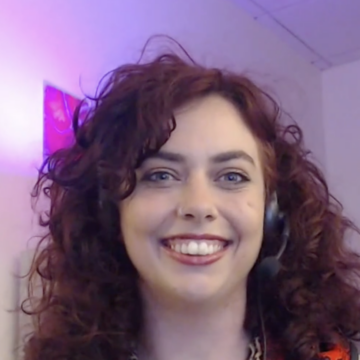
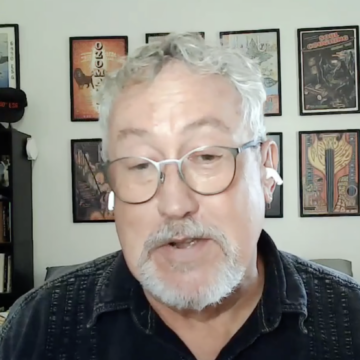
Hey, everybody, it is Burning Man LIVE once again. I’m Stuart Mangrum and today I am talking to two friends. I’ve got Jax Creatirix and Zephyr on the line.
ZEPHYR:
So we’re actually from Victoria and Vancouver Island specifically.
STUART:
I was going to go straight to geography for my first question.
ZEPHYR:
All right. Well so where Vancouver is, most people know, right? Just up above Seattle, you know, head over the border. And of course, Vancouver Island is that long Island that’s right across from Vancouver and just above Seattle and the Anacortes Islands there. And yeah, we are right in the middle, basically, of that long island.
STUART:
So it is Vancouver Island and the main city on Vancouver Island is Victoria, which is in… Vancouver Island. It actually has a bigger population than Vancouver City, doesn’t it?
JAX:
It’s huge. Yeah, Vancouver Island is so big that we’re considering if we need Regional Contacts for the Northern island.
STUART:
All right. Well, tell me a little bit about the vibe, about the terroir. You know, every Burning Man Regional Event where it is in the world is going to be influenced by the setting, right? And so how is your regional event, Otherworld, different to, similar from, other events in other parts of the world, even from something over on the mainland of British Columbia?
JAX:
Well, our event is still on the southern side of the island, but we have huge populations from Victoria, which is kind of like the urban center. We also have huge populations of people from the Gulf Islands. And then we have a whole other community that’s from the northern island. And so Otherworld is the opportunity when people from all of the island get to come together. There’s actually a huge pull of people from the mainland, from Vancouver, who come over for Otherworld as well.
ZEPHYR:
Yeah, we have a lot of little artist communities that are on these little islands that, you know, make a living building craft and selling things over the mail and that sort of thing. And a lot of those artists end up coming. It’s great.
STUART:
So the vibe there seems to be perhaps a little bit more, can I say hippie, than other parts of the area?
ZEPHYR:
Even where I live, you know, if I wear rainbow colored pants and a Burning Man shirt or something like that, and gumboots to the store, the old lady next to me is wearing rainbow pants and gumboots to the store as well. And you know, and she’s like, “Hey, you’re looking good. You look comfy today.” And so it’s great to be able to wear whatever I want. The same stuff that I wear even at Burning Man. Throw on a costume shirt or whatever, go in and, it’s that it’s kind of that hippie vibe. And a lot of the culture is looking for that. So yeah.
STUART:
I’ve seen pictures of the venue. It looks fabulous, looks lush. I’m so used to having my Burn in an arid desert. Tell me about the place where this takes place.
ZEPHYR:
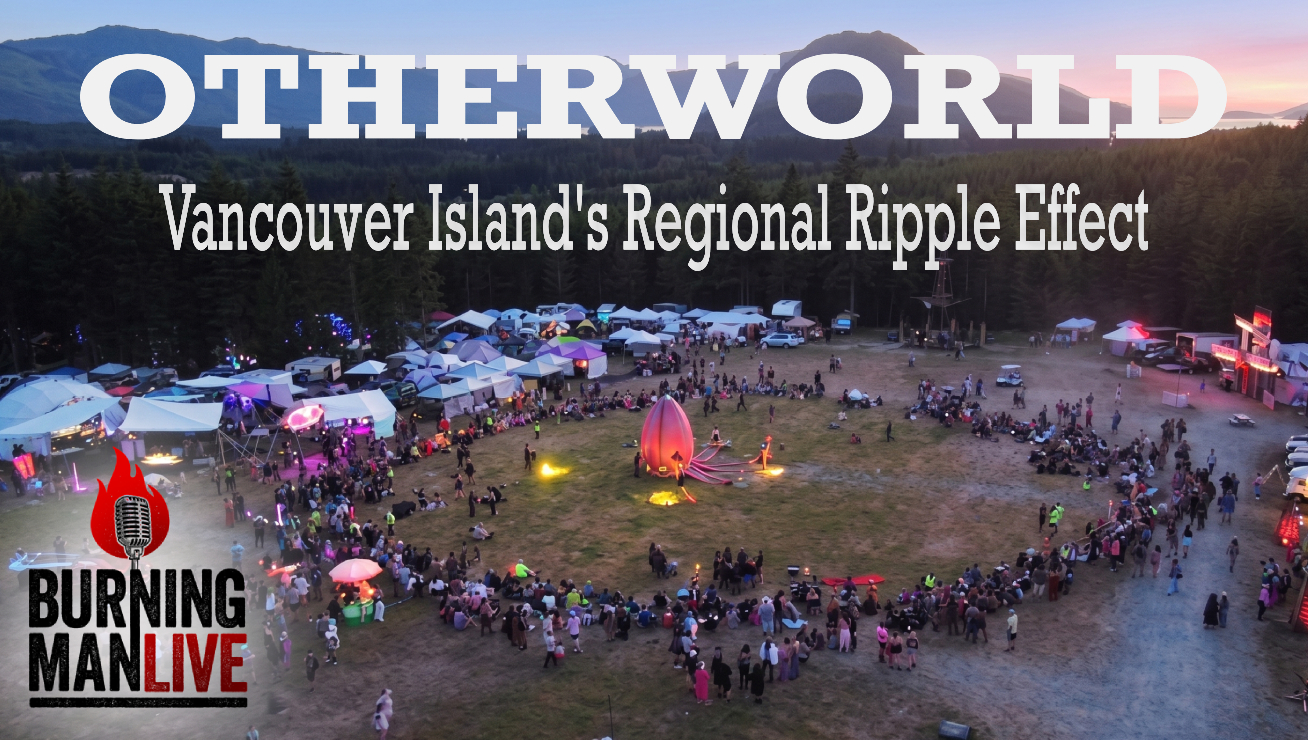
We’re on traditional lands of Ts’uubaa-asatx and the Cowichan tribes, the Ditidaht nation, as well, with Cowichan lake. So it’s a very forested area, very large. Even the venue, it’s got some stages, but then there’s a whole area that’s just camping and forest where you can wander through and kind of have adventures. And the landowner has been gracious to allow us to kind of develop the land and build little trails and put our lights up and kinda change the vibe, the theme of the land to also give it that hippie aesthetic.
And the landowner is kind of starting to get into it. The more that they work with us, the more that they realize, “Hey, this is working for us.” And, we help them build campsites and we help them clean up the land and do some Leave No Trace before their events and after their other events to really help them out. Yeah. So it’s a great place.
STUART:
And this has been going on for quite a few years, back to 2009 or so. Has it always been in the same place?
JAX:
No. It used to be at a little tiny place which is a much more sensitive land place to be. And then for a long time it was at a small campsite called Sunny Days. But our event just outgrew those venues. And so now we’re currently at Laketown Ranch, which is the biggest capacity venue on the island.
We face some unique challenges in that we’re trying to camp 3200 people for four days, which is a big demand on our little tiny island. So we’re at a place where this venue is probably the biggest one that can host us.
STUART:
Yeah, that’s… I’ve got a couple of questions about that. First, the growth pattern. I mean, for years this was a couple of hundred friends. Now you’ve got enormous demand for it. You can camp 3200 people. Even that sounds like that was probably a stretch logistically. I know that there are no bridges to the island. Everything has to get there by boat or by airplane, right? So tell me about that growth pattern because events around the world, you know, face this. I’m wondering what that was like for you guys for Otherworld.
ZEPHYR:
Post-Covid, it really hit. People started to want to have that event that’s more closer to home, and the regionals started to become a lot more important, we noticed. Especially around other places in Canada, as well as, you know, we’ll say some political things have occurred since then, which have also kept people a little bit closer to home. And so we’ve had a lot more folks saying, “Hey, we can’t make it to the big Burn, we really, really want to, but we still want to have that experience. And we’ve heard that you provide that experience.” So it’s been really great for us to, yeah, to provide that and see that growth.
But also the biggest challenge for us is the venue size. That venue can actually handle 10,000 people when they have other people. It can handle more, but we don’t want to make the venue seem crowded. We don’t want to put people in sardine cans back to back. We really want to have the venue open and give it that experience like you are wandering through a forest in the middle of the night and coming across and stumbling across adventures and side quests and things like that.
We have about three times the demand of what we have set as our capacity. And it’s a bit of a challenge because there’s a lot of folks that are anxious to get in, and we have to start looking at different ways to allow folks to have that fair chance to be part of our community.
STUART:
And do you make provision for your core contributors? Do they have some other way to make sure that you have that certain percentage of people who are bringing the camps and the art all that? Do you have separate ticket tracks for them?
ZEPHYR:
Yes, yes we do. And those, all those ticket tracks were exceedingly overwhelmed this year, each one of them. And so it became a problem of, you know, what do we do, and how do we carve it up into our total capacity? Where before we had only so many people applying for subsidy, and only so many people applying for camps, and so there was always that wiggle room. The wiggle room has kind of gone away now.
But our core contributors, such as our production team, the teams that fill the vital roles, gate, parking, those sorts of things, those folks do have a chance to get their tickets and be part of the event. And then of course, we also have our art prize. We are an art event, and we do give art grants. So art is important. And of course, we can’t give you an art grant without providing you a space and a ticket to come to our event and provide that as well.
But it’s a juggling act right now for us. Do we make this event bigger, or do we start to spawn off sister events, and start to have more events in the year, to be able to provide a fair chance for everybody to show their art and to participate?
JAX:
This is the first year our demand is so high that our production team has decided not to do general sale tickets for the first time. Which is radical. Participants need to have art. They need to be a part of a theme camp. You got to be volunteering to do it. And then now our event is solely directed tickets.
STUART:
So how do you create porosity into the system? How do you create opportunities for people to come for the first time and to take up one of those roles?
ZEPHYR:
Well, that was one of the biggest challenges that we came across this year is planning for obviously next year, because our systems are overwhelmed at this point. It was difficult to choose between the people that have already applied. What do we do? This is one of those ‘it was better next year,’ and to start to look into how we can create a little bit more equality in that structure.
Currently I think that we could do better there. But like I said, we, uh, we were overwhelmed with the amount of people that wanted to participate. And we still are, there still people making daily Facebook posts wanting, “Hey, I can do this. I’m a carpenter. I can do that. Please let me into your event.” And it’s difficult at this moment because we have to say, “At this time we’re full, but we’re looking into what we can do better next year to make this more equal for everyone.”
JAX:
Side Burn, which is Ontario’s Regional Burn, they’re all lottery based, which adds more complexity. I mean, it seems fair, but then I think that adds a whole other level of challenges to navigate. So I think part of the incentive for new people is asking them to volunteer for production roles. So that’s like front gate. We need greeters, we need parking, so on and so forth, just to make sure that you don’t have to, like, know somebody in a theme camp, like it doesn’t become like a ‘you know somebody’ situation. And then currently we’re just relying on our volunteer leads to do their best to manage spreadsheets with thousands of extra applications than they can hold. So it’s challenging. I really believe in our team. So that’s happening as we speak.
ZEPHYR:
Yes. Yeah.
STUART:
I guess a plus side is that you have fewer acculturation challenges for newbs, if you have people, or if you have people bringing their friends in. There’s always the personal sponsorship.
JAX:
And that was the issue of like constantly growing, is like we run into this issue of acculturation. If we just keep increasing the space, then are we like losing some of that culture that I think is an important part of the Burns, which are very different from festivals. So capping this growth, which is at the same level that we were last year, kind of allows us to keep this very full space with over ten soundstages, like it’s a huge event. But that way we also address some of these issues about acculturation.
ZEPHYR:
Yeah. And we do get those people that go, “Hey, I hear you have ten soundstages. Where’s the dubstep playing?” They start to get the rest of the folks doing the snarkery on them, and, haha…. Yeah.
STUART:
Interesting. So are those stages all volunteer run, are they run by like camps or are they part of core infrastructure?
JAX:
No. Production doesn’t run theme camps or sound camps. They’re all participant volunteer driven.
STUART:
So this sounds like it’s organized very much along the lines of Black Rock City. I’m wondering if there’s anything that didn’t work for you from Black Rock City that you’ve modified or changed or improved on?
ZEPHYR:
Yeah, that’s a bit of a tough one. We’ve increased and built our own software for volunteer scheduling. We just couldn’t find anything out there that just needed… specifically what Burning Man does and kind of the veracity of schedules around different teams and stuff like that. So one of the things that we did is we looked into building our own software tools, for mapping, for scheduling, and stuff like that. We thought that that was very important, and we started sharing it with the rest of the regional communities, because we thought it was important to keep that open source as well.
JAX:
Didn’t we build our ticketing platform this year, too?
ZEPHYR:
We built most of the ticketing platform as well. Yeah. Because…
JAX:
Yeah.
STUART:
Well, hats off.
Yeah. At the scale of the Black Rock City event, we’ve been able to get a lot of, you know, custom work out of our ticket vendors. But we’ve been through a few, you know. It’s taken us a while to settle on where we are.
Let’s back out a little bit. I want to know, how did you get into this crazy thing? Jax, what was your introduction to the Burning Man world and what got you to where you are now?
JAX:
My flow arts community. So playing with my hula hoops and stuff. And then also just being in the rave community generally. I started playing with fire hula hoops, which was super fun. And then all of my friends were going to this thing called Otherworld. What is that? And so we ended up going.
In my first year, I actually performed in the effigy show, which was all kinds of exhilarating and overwhelming. And I remember a distinct moment of acculturation for me was when the effigy was burning, I thought this was like a very sacred, serious, “The effigy is burning!” And then somewhere in the distance, someone started playing, “It’s getting hot in here! So hot!” and like, it totally changed the vibe. And I was like, this isn’t serious at all. And it’s like, “Welcome to Burning Man.” And then we just kept going, right? And it was really fun.
And I made the decision to go to Black Rock City in 2019. Which was crazy. A girlfriend of mine, we were co-leads for the effigy because during the pandemic, we spent a lot of time doing outdoor fire jams, hosting jams. And so in 2022, our Fern Burn Club, is what it’s called, had the opportunity to lead the effigy show, and we put on an epic show that faced some challenges, but it was quite impressive.
And then my current pattern is to take on the effigy leadership every other year, and that helps me to prevent from burning out. And it also helps make the role a little more accessible to others. So then it doesn’t just become, “Oh, that’s what Jax does.” It’s like, “No, no, no, what can we do? What do you want to bring to the table?”
Ed McDonald was our previous RC, and they were in the position of bringing on new RCs. And he sent me a message because I’m very active in the community. I’m an art organizer and an event producer and all this kind of stuff. He thought that I would probably be a good representative of the community. And I felt all kinds of like, “Me? You think I could do it!?!” Um, and then I did. Yeah. So I’ve been an RC with Adam now for, has it been a year?
ZEPHYR:
It’s been a year. Yep.
STUART:
All right, Adam. Let’s hear from you.
ZEPHYR:
I did it backwards. So my story of getting into the whole Burning Man culture was I was super depressed at work one day. My boss comes up to me and he’s like, “Look, you need to get out of this funk. I’m going to take you to a place called Burning Man, and you’re going to resolve all your problems, and it’s going to be cathartic, and you’re going to go and be naked in the desert.” And I’m looking at my new boss going, I don’t know about this with this guy.
But I took a leap of faith, and I went down to Burning Man. And by day three, I was trying to volunteer at the coffee shop in Center Camp because I heard that they, you know, needed some volunteers because I couldn’t get my coffee quick enough. The line was way too long. So I’m like, well, I’ll volunteer. I’ll be “part of the problem.”
After that, I got into the DMV intake in 2016, and have been working with the DMV ever since. Got on to the DMV council about two years ago, and I’ve been working with Placement and things like that, and kind of working behind the scenes and some of the culture change and stuff as well at Burning Man and kind of just, you know, figuring it all out.
And then I decided, hey, I should probably actually go to that Regional Burn that I keep missing and I started the DMV at Otherworld. And then I realized that there was more to that event that could use my touch. So I looked into some stuff, sort of helping out. And then, same as Jax, got reached out to by a previous RC that said, you know, “You have a lot of knowledge in this, I think you could really help us out in aligning us better with Burning Man, and Burning Man actual.” And so, I met up with Jax. And you know, we’re two very different people who I think really take the community too seriously in our own sort of ways, and really work well together because of our different ways of looking at things.
So yeah.
JAX:
I have some reflections on I think why we work really well together. I am deeply situated in Victoria where most of our community lives. I’m connected to lots of things. Whereas Adam, he’s further away from us, he’s on Galiano. But what he has is way more information about Burning Man actual, in the desert, “that thing in the desert.” And so he has a lot more experience there. So between us, if you have a question, we have perspectives on how the thing is running. I definitely have extrovert party organizer energy. Adam’s very good at spreadsheets and reports. And so between us we are the perfect RC.
STUART:
Well I have a bunch of questions now, based on all the individual things that you do. Both of you wear so many hats.
Adam, Zephyr, I want to know more about DMV in Otherworld because in my experience, mutant vehicles tend to be kind of on the chunky side. How do you get them over there? Do they live… Do people… Do you have people making them on the island and driving them to the event, or you have to ferry them over or? Where do they come from?
ZEPHYR:
Most of the vehicles are small. Most of them are, you know, golf carts that are covered in cereal boxes and LED lights. There are a few larger vehicles from Vancouver area, from the mainland, where they can travel across Canada, or from Seattle that do come up from time to time, which are always great to have a regular Black Rock City vehicle. It’s always nice to see one of my Otherworld stickers on there, where I’m slapping a DMV sticker on it as well, and I go, “Oh, I put that one on there.” It’s a nice feeling for sure. Um, but you’re right, you can’t bring a 30 foot tall ship with flame effects in a forest.
We’re also on quite a hill on that site, so it’s very, very difficult for us to actually have the mutant vehicles traverse the site, unless they are smaller vehicles. Flame effects are pretty much a no go in the forest, especially in the summertime. Lasers, sorry. There’s too many turns and twists and stuff and you’re not going to be sitting too stationary. The ground’s not level. All these things that are a bit of a challenge for us there.
But um, it’s still a growing culture, growing community, and people are still into trying to do their best to meet the mutant vehicle criteria, despite the fact that they might have to carve it up and stick it in the back of a van to make it work.
STUART:
My favorite mutant vehicles are actually the low budget, built on site, sorts of things.
Okay, but the fire hazard – that’s got to be a huge consideration. I hadn’t even thought about that. And yet you have an effigy burn. Tell me about the Effigy Burn, Jax, which I guess you’re the manager of that piece of the pie every other year.
JAX:
Kind of. So I’m in charge of the fire dancers. I do the effigy fire performance. We have not been able to burn an effigy since 2022, which is really hard. And it’s a huge part of our culture that we don’t really get to participate in anymore, which is difficult, but it also presents opportunities like, okay, well, what else are we going to do?
For example, Vancouver’s Regional, they were called Burn in the Forest; that was the name of their event, but they had to rename their group and their event because they were running into issues with venues and insurance and blah, blah, blah. You know?
So we no longer burn an effigy. The last year we burned it was 2022 when we did a rocket ,and it was crazy. We had the bazooka fire cannons that I think they were called Hello Kitty cannons, and they lit the rocket on fire. And it was overwhelming in the best way. But since we’ve had to kind of like pivot on, how do we deal with an effigy that doesn’t burn?
I remember last year was a frog ‘cause our theme was Frog Bog, ‘cause our venue was doing frog habitat rehabilitation, so the whole theme for the event was frog. So the effigy was like a big egg. And then there were some flames, I think that like flame paper, that released. And then the whole thing opened like an egg. And then there was a cool frog statue.
This year there’s some discussion of like, well, are we going to pull it down with ropes? What are we gonna to do!?! So the effigy lead is a separate position from me and they’re in charge of that. We’re working on some theatrics that brings out the yang energy of like “Burn the Man!” but then also in a way that isn’t on fire and in a way that’s easy to like, clean up and contain and take off site also.
STUART:
Well, this year’s theme is MOIST. Is that right?
JAX:
Yes.
STUART:
I’m wondering what a moist Burn looks like. I’m wondering where the theme comes from. It’s something that’s kind of near and dear to my heart. What’s your process for developing a theme and agreeing on it because… especially that last part?
JAX:
Fuckery. Fuckery. Okay, so did you ever hear about the, um (What was it?) Boaty McBoatface vote? Did you ever hear that?
STUART:
Yes. Yes.
JAX:
Okay. So the same thing happened to us. We did our first production meeting and the person leading it was like, “We’re going to choose the theme right now!” So whoever was in the meeting, they did like a vote, and they put forth, okay, “Everyone put their ideas forward,” and different ideas go up, and then someone’s like “Hehehe, MOIST.” And then all the votes were like MOIST!
ZEPHYR:
It’s generally immaturity that chooses the theme. It’s that inner child that everyone has. And we all get together after not seeing each other for a year and we’re like, “Giggle, giggle, giggle. Let’s make it this word, giggle, giggle.” And those words always, usually end up winning. And then we try to just make it work. You know, we had the theme upside down one time when we’re like, okay, what do we do with this? And we just turned all the signs upside down and stuff.
JAX:
Yeah, I think it was like a continuation of Frog Bog because Frog Bog, we had the most reception to that theme I think we’ve ever had. People loved it. All the costumes, the music, the art, it was all frog. So I’m pretty sure what they were trying to do was like, well, what’s a continuation of this Frog Bog idea? And then now MOIST.
ZEPHYR:
It was the most people were happy because they’re like, oh, I can reuse half the stuff from my camp from last year.
STUART:
That’s always a plus.
JAX:
Yeah. I’m facing a unique, frustrating position of trying to produce a moist fire show, which is difficult.
STUART:
Steam. Think about steam.
JAX:
Steam. Yeah. This year we’re actually playing a lot with bubbles. Yeah. So I don’t want to reveal too much because we’re still ahead of the event. But I’m doing my damnedest to bring a wet fire show to Otherworld.
STUART:
Well, I’m gonna keep my eye on that. Uh. We still, you know, burn a Man every year because people insist on it. But, I always wondered what would happen if we didn’t. How could you Burn without burning? It’s like a Zen koan.
JAX:
It is. Yeah, but fortunately, we’re a whole bunch of creatives, right?
STUART:
Yeah. We’ll talk about what that bunch is. What’s that group look like? What’s your management structure or governance system? How many people sit around that table and make jokes about moisture?
ZEPHYR:
Our production team itself is around 200 people that are in the various roles, give or take, I believe, if not more.
JAX:
That’s crazy.
ZEPHYR:
Yeah. And on the production leads, the people that lead the strams, there’s about 13 to 14 of them that are essentially the people that make a decision. So it’s a bit of a council that ultimately makes all the decisions for the event, at this time, separate from the nonprofit organization that funds the event. So they entrust some producers to produce the event. The producer of comms, for example would be myself, and a few other folks. Then we have a producer of events and core services, health and DPW, that sort of thing. And then they have their structure underneath them.
The governance model that we’re currently under is that we are fully entrusted that we will run the event and we will make it work. And so it’s a bunch of competing brains, neuro-spicy people, that are all in the room together, that all have these inner child ideas and want to make it happen. And we giggle and we take way too long in our meetings sometimes because of all the inside jokes. But at the end of the day, everyone’s got the same goal in mind, and everyone wants to have a successful event. And that’s really what we can get together on and make it happen.
STUART:
If you’ve never been shushed in a meeting for having too much fun, you’re not doing Burning Man right, as far as I’m concerned.
ZEPHYR:
Fair.
STUART:
There is a nonprofit. Is that Kindle Arts? Is that right?
ZEPHYR:
That is correct.
STUART:
Their board is fairly hands off about operations or…
ZEPHYR:
So the current board is on their way out and they’ve actually expired their time. And so we’re actually in the process looking into elections for a new board. And so part of the process to being hands off is also to allow for that continuation to happen during the board change and to not have disruption to the event, especially since this is happening so close to events execution.
STUART:
Cool. So what about the rest of the year? Tell me about, you know, the larger year round fun and games of Victoria’s Burning Man community?
JAX:
One of our goals moving forward is that we want to address the over demand by adding more events. A lot of the other things we do with the rest of the year aren’t necessarily put on by Kindle, but they’re just kind of like community events.
So, for example, last year um I took the lead in organizing “Burners and Beep Boops,” it was called, which was really cute. So there’s an interactive art-cade, it’s called, in our city, and it’s a whole bunch of like fun interactive art machines. And when you press the buttons, they light up and they make different sounds and it’s super fun. And so I organized the equivalent of a Burners and Beers, but instead of being in a restaurant where we have to spend money and we have to drink alcohol, we have to just sit still, it was an opportunity and in all ages event where we could come, and we offered grilled cheese, and people could play with the art. So we did that a couple of times in the spring before the event. That was a really nice way to introduce people and to also see our friends in a low pressure environment.
Other Burner events include… we have a practice called Goose Balls, which I really appreciate. So what that is, is a decentralized bike party. No one person is in charge of Goose Balls. It’s just if you feel like we need to have one, then you can call one. And the idea is that if you’re organizing it, you have a speaker on the back of your bike and you kind of pick out a route ahead of time, and then we j ust go and play on our bikes and stop in beautiful locations around our city. So trying to take advantage of as much like decommodified gatherings as we can.
And I think outside of that, there is the Fern Burn Club, which does fire spinning every Tuesday at the Fernwood Community Center, and in the winter they rent indoor space so we can keep practicing in the winter. And in the spring we do lots of fundraisers for all the theme camps. Those could be like in clubs or sometimes they’re in different restaurants or whatever. But I think the theme camp fundraisers are the other big events that get people together.
STUART:
So I’m still thinking about fire and events without fire. So, Jax, do you spin fire or do you spin fake fire?
JAX:
Fire spinning is considered the equivalent of like, tiki torches. So it’s not quite the same as having like a fire pit or a burn kind of thing.
STUART:
Open flame. Yeah.
JAX:
Yeah. So we get a lot more leeway in that. Part of what we have to do is like providing like our safety plans. We have like safety coordinators for that, that are the higher end producers. But yeah, we are allowed to fire spin, which is amazing.
STUART:
I know that you have an interest in safety, Zephyr, having been a Black Rock Ranger in Black Rock City, and also a ranger at Otherworld. What’s that like? What are the situations that you get into at Otherworld? Are they kind of the same random, unpredictable situations that a Ranger would walk into anywhere? Or is it more chill?
ZEPHYR:
You would think it would be more chill. But for example, last year we had, we were getting temperatures that are Block Rock City temperatures; at some point they’re up to 40 Celsius. And so yeah, we had a lot of heat exhaustion, a lot of the same scenarios where people are just, you know, not quite prepared for that. And it was actually one of the first hotter weekends of the year so, kind of caught everyone by surprise.
Wandering around, a lot calmer, a lot more of a chiller vibe, for sure. But there’s always unexpected things, right? We’re running lots of sound stages. There’s lots of folks that are going to be irritated staying up for a few days. And it’s all about, you know, taking care of your community, taking care of your people. And of course, being a closer community, you’re going to know someone who knows someone. And so there’s also a little bit of taking care of your friends, so to speak, where Black Rock City almost feels like taking care of a stranger. Yeah.
STUART:
A stranger who’s maybe not going to be a stranger for long, right?
ZEPHYR:
Of course.
JAX:
Do you want to talk about being comms lead Adam? Do you want to talk about that, or no?
ZEPHYR:
Um, it’s been an interesting year for comms.
JAX:
It’s a crazy… Bless you, Adam. God bless. Jesus!
STUART:
Adam, you and I both have at least one foot in the communications team. I’m curious what that has been like for you.
ZEPHYR:
Well, radically different than Black Rock City, I can assure you that. We’ve recognized that a lot of folks are not interested in being beholden to the social media to be able to get their information. And because of that, we’ve had to kind of correct course around that and start to only give out email communications and official communications on the website and stuff like that, and start to say, “No, the information is not on the Facebook page where the rest of that, um, toxicity is. It’s actually here. This is where the true source of information is.” And it’s been difficult along the way to actually get that going and to get a proper communication channel working.
It’s going to really gratefully help us to kind of start to move away from that and start to have that radical self-reliance of folks going to the website and looking at the information themselves instead of just going, “How do I get a ticket?” on the Facebook post, and then snarkery ensues. We hope to learn more from some other regionals on kind of how to navigate that.
STUART:
Well we’re all learning it all the time as people’s, you know, communications habits change, their social media habits change. Yeah, that mix of media is certainly an interesting challenge that you have to constantly reevaluate or get left behind.
ZEPHYR:
For comms it’s about setting those expectations as well. One of those things that you kind of alluded to before was having those people that are not acculturated with Burning Man culture and finding a mechanism to be able to, to be able to do that. Luckily, a lot of folks are coming with their theme camps or part of a production, so they’re going to have a mentor or someone nearby who goes, “Hey, pick that up off the ground, you MOOPer,” or “Wear some lights, you Darkwad,” as we do in our snarkery ways to try to, you know, help people with our hearts, with our words sometimes.
The acculturation, I think, because we’ve had that rapid growth has been very interesting to see folks, for example, come from those rave communities, and then make those adjustments on the fly and then come back next year and go, I’m going to do it better.
Some of the people where I camped next to us said, “Oh, I don’t want to camp next to those folks again. They don’t get it. They’re just, they’re from out of town. They don’t understand Burning Man culture.” Next year, camped next to the same people. Wonderful camp. They totally got it. They were all wearing matching—what was it?—Hulk Hogan stuff! I forget what it was… Eerything was in theme the whole time. And just like, “Oh, they get it now, right?”
And so sometimes it’s just about, you know, giving people that room to grow and that opportunity to learn about the culture, and not pick on them all the time. Because we can sometimes jump right down people and go, “Oh, you’re not doing it right.”
And, you know, sometimes we have to guide people to do it right, lead by example. Be the bigger camp, do the funny thing. Go over to them and, you know, squawk a rubber chicken or something and then hand it to them and say, “This is your gift,” and walk away because, you know, that’s the kind of acculturation that you’re going to get when that guy’s holding a rubber chicken in the middle of the road going, what the heck? And then, you know, later on using that rubber chicken as a gag. And before you know it, that rubber chicken is now part of their life, and you’ve just turned them into a Burner over a rubber chicken that you handed them in the road.
STUART:
It’s become a sacred relic of their camp.
ZEPHYR:
Right. Absolutely.
STUART:
We’re getting very close to Otherworld 2026, right? It’s coming up. I’m really glad that you were able to join me. I’m sure you’re super busy right now. I just want to know if there’s anything in particular you are looking forward to for this year.
JAX:
Most of our standard camps that are legacy camps are taking the year off. Which is, I think, really important, because all of us are volunteers and these are camps that have been going consistently for years. So I think a lot of those big camps that we expect to see all the time are not going to be there. It’s going to open up the range for all new camps and new experiences, which will be fun because otherwise you just get into the habit of going to the same, oh, I’m going to go to this on this day, and I’ll know what’s going to happen at this, you know, whatever. So I think there will be a lot of novelty with that.
I’m also looking forward to a lot of those people who are normally core crew and are deep in the spreadsheets, all of a sudden they get to just enjoy the event in a different kind of way. So I’m really looking forward to seeing how our community comes together, how we like, overcome some of these challenges and what kind of imperfect art we produce.
ZEPHYR:
Totally, yeah.
For me, it’s about going there and being proud of what happens, you know, making it all worth it. The hundreds of hours that we spend outside of the event all the way up leading to the event, and, all the, like Jax mentioned, the uncertainty about ticketing and software and things like that that are happening. Are we going to be able to burn? Are we not? Most likely not. Right? It’s just one of those things where we just have to roll with the punches all the time.
And at the end of the day, you have to tell yourself “This is good enough.” What we’ve produced is good enough, and you have that moment, you know, little tear goes down in your face and you go, I’m happy. We did it. and we’ve completed it, despite the fact that XYZ happened and it didn’t happen the way that we wanted it to, but we learned a lesson along the way and we will… It’ll be better next year.
STUART:
Next year was always better. That’s what I heard.
OK. I’m going to wrap with the question that I like to ask all of my guests. Anybody who spent as many hours as you have putting together a Burning Man event, I just got to zoom out and ask the big why? How does this… How does this make the world a better place? How does it make individuals lives better to have this kind of an experience, or to be part of this culture?
ZEPHYR:
For myself, it’s about, you know, you’re not going to be able to affect everyone, but there’s going to be somebody that you do affect that’s going to have a positive butterfly effect. One of those tech bros that is out there that goes, “Yeah, I’m going to come to this, uh, rave in the forest because my friend said so.” And then of course, when they do, they realize, oh, it’s a Burning Man event and, oh, there’s rules and a culture around it. And they sit down and they talk to some people. And I hope that they can take some of that home with them. And if we could just affect 1% of the people that come, I think that we can make a change in the world. To take some of those civic responsibilities and the communal effort, you know, take some of that home with them, and apply it to the way that they’re doing business, or the way that they are at home.
JAX:
I think my answer dovetails into also what I’m looking forward to and why I think it’s important. This year, for the first time, my parents are coming! And my parents are medieval re-enactors in their own life.
STUART:
Awesome.
JAX:
So they’ve been doing large scale campout events my whole life. And they’re very similar in that, like, you only see your friends in a field on the weekend, you know. But mine involves a lot more bass music and a lot more LEDs and lasers. So it’s different.
STUART:
And less chainmail, especially if it’s 40…
JAX:
Well, different chainmail, I would argue.
ZEPHYR:
Scantily clad chainmail. Yeah.
JAX:
So one thing I’m excited about this year is for my dad to do medieval sword foam play. So he’s going to have foam swords and he’s going to share his love of sword fighting with the community.
And the reason why I would love them to participate in this is because I think Otherworld and Burner events give us an opportunity to realize and to practice that we can do culture differently, we can do events differently. Not everything has to be bought and sold. We can volunteer together. We can create decommodified spaces together. We can create radical areas of expression. And it’s always fun to kind of bring my parents, who have very little kind of like performative art experience and to show them, like, show this world to them.
But the other thing I like to do is bring some of my rave friends. And rave friends are generally used to just kind of being consumers. You pay a lot of money and then you consume the festival. And so it’s really radical to show them this world where it’s like, no, no, no, you have to be a participant. We’re all volunteering. What are you going to contribute? And I think that gives a sense of ownership, and a little more like belonging because we’re participating and creating together.
So I do it because I believe in humans. I believe that we can do culture differently. And regional Burns and Otherworld and Burning Man specifically are real life containers where we get to live out these philosophies in real life that we often just get to like, hypothesize about. So that is really important to me.
ZEPHYR:
Solid answer.
STUART:
Terrific.
ZEPHYR:
We’re excited for Otherworld. We’re excited for what’s coming and, we’re excited for the changes that are going to eventually come for us. And like I said, more events, bring the Decompression back, and that sort of thing and kind of branch out a little bit. One of the things we were talking about was the ability to not burn anymore, or to not be able to have an effigy that… Maybe we look at a winter Burn or a fall Burn we could burn an effigy and allow the people that are more interested in effigy and temple Burns to actually have that cathartic release.
STUART:
Alright. Thanks. My guests have been Jax Creatrix (Jacqueline Kittel) and Zephyr (Adam Jamieson). Thank you so much for coming on the program, both of you.
ZEPHYR:
Pleasure.
JAX:
Thanks for having us.
STUART:
Good luck with this year’s Otherworld. And I hope it’s fantastic, and a lot of people have an incredible time.
ZEPHYR:
Thanks, Stuart.
JAX:
Thanks for having us.
STUART:
Vav, what did we leave out?
VAV:
Let’s see, doing culture differently, volunteering, creating ownership, bubbles instead of burning, novelty over burnout. Nothing was left out!
STUART:
OK.
VAV:
Burning Man LIVE is our labor of love from the Philosophical Center of Burning Man Project, our public benefit 501(c)(3). If you want to pay it forward: DONATE.BURNINGMAN.ORG.
Thanks to Jax, Zephyr, and all the people at Otherworld. Check out the photos. It’s amazing.
Thanks to the team here, Andie Grace, DJ Toil, kbot, Martin, Michael Vav (that’s me), Stuart Mangrum, the Regionals people, and in this 40th Burning Man season, thanks, Larry, for starting all of this.